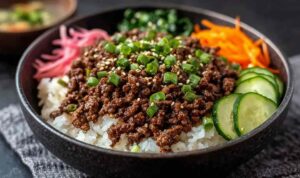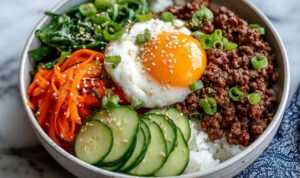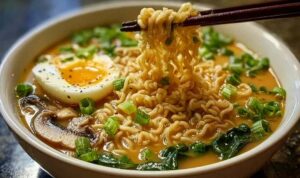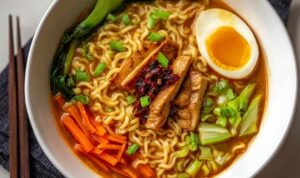

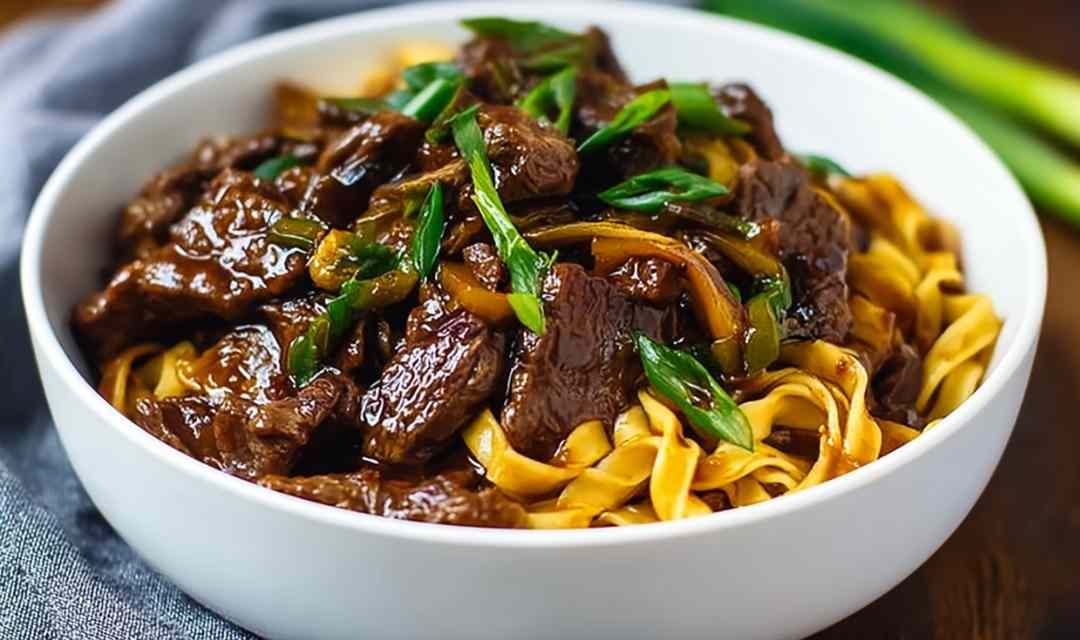
My Slow Cooker Korean Beef Noodles are pure comfort food magic that happens while you go about your day. This hands-off recipe transforms tough cuts of beef into melt-in-your-mouth tender pieces swimming in a rich, savory-spicy gochujang sauce. I love coming home to the incredible aroma of garlic, ginger, and Korean spices filling my kitchen after 8 hours of slow cooking.
I remember the first time I made these Korean beef noodles in my slow cooker on a busy Monday. I threw everything in before work, and by dinner time, my house smelled like my favorite Korean restaurant. The beef was so tender it fell apart with just a fork, and when I stirred in those chewy udon noodles at the end, I knew I’d discovered something special. These Slow Cooker Korean Beef Noodles have become my secret weapon for impressing dinner guests with minimal effort. The deep, complex flavors taste like you spent hours in the kitchen, but the slow cooker did all the work.
Table of Contents
What Goes Into Korean Beef Noodles
I always use ox cheek or short ribs for these Slow Cooker Korean Beef Noodles because the long, slow cooking time transforms them into incredibly tender, flavorful meat. Pro tip: if you can’t find ox cheek, chuck roast works beautifully and is usually easier to find.
- 1 large onion, finely diced
- 2 tablespoons gochujang (Korean chili paste)
- 2 tablespoons dark soy sauce
- 2 tablespoons rice vinegar
- 1 tablespoon light brown sugar, packed
- 1 tablespoon garlic-ginger paste
- 1 tablespoon tomato paste
- 3½ oz low-sodium beef stock
- 14 oz ox cheek (or oxtail, short ribs, or chuck roast)
- 4 pouches ready-to-use udon noodles
- 1-2 tablespoons fresh coriander, chopped
- 1 tablespoon black sesame seeds
- Kosher salt and black pepper to taste
Personal tip: I buy garlic-ginger paste from the Asian market to save time, but you can easily make your own by blending equal parts fresh garlic and ginger. For the Slow Cooker Korean Beef Noodles, dark soy sauce adds deeper color and flavor than regular soy sauce, but you can use what you have.
Slow Cooking Your Korean Beef to Perfection
I recommend prepping everything the night before so you can just dump it all in the slow cooker in the morning. These Slow Cooker Korean Beef Noodles are truly set-it-and-forget-it easy.
Step 1: Add the finely diced onion to your slow cooker insert first. Then add the gochujang, dark soy sauce, rice vinegar, packed brown sugar, garlic-ginger paste, tomato paste, and beef stock. Stir everything together really well with a spoon or whisk until the gochujang is fully dissolved and you have a smooth, reddish-brown sauce base. This sauce is what makes these Korean beef noodles so incredibly flavorful.
Step 2: Lay the ox cheek (or your chosen cut of beef) on top of the sauce mixture. Use a spoon to gently turn the meat over or spoon some of the sauce mixture over it so the beef is completely coated on all sides. This ensures every bit of meat gets infused with flavor during the long cooking time.
Step 3: Cover your slow cooker with the lid and set it to low heat for 8 hours. This is the magic moment where you walk away and let the slow cooker work. The low, gentle heat will transform the tough beef into incredibly tender shreds while the sauce reduces and concentrates into something amazing. Your kitchen will smell incredible after about 4 hours.
Step 4: After 8 hours, carefully remove the lid. The beef should be so tender it’s practically falling apart. Use two forks to carefully remove the beef from the slow cooker and shred it into bite-sized pieces on a cutting board. Return all the shredded beef to the slow cooker and stir it back into the sauce.
Step 5: Add the udon noodles and chopped fresh coriander to the slow cooker with the beef. Stir everything together gently, making sure the noodles are submerged in the sauce. Turn the heat to high and cook for about 25 minutes more, stirring occasionally, until the noodles are hot all the way through and have soaked up some of that delicious sauce. The noodles should be chewy and glossy.
Step 6: Taste your Slow Cooker Korean Beef Noodles and season with kosher salt and freshly cracked black pepper as needed. The soy sauce and gochujang provide a lot of flavor, but a little extra salt can really make everything pop. Garnish with black sesame seeds just before serving for a beautiful presentation and subtle nutty flavor.
Pro tip: If your sauce seems too thin after the 8 hours of cooking, remove the lid during the last 30 minutes to let some liquid evaporate. If it’s too thick, add a splash of beef stock or water.
Delicious Sides for Korean Beef Noodles
These Slow Cooker Korean Beef Noodles are hearty enough to be a complete meal, but these sides add fresh contrast and variety.
Cucumber kimchi: The cool, crunchy, tangy kimchi cuts through the rich beef and provides a refreshing contrast. The fermented flavors are traditional with Korean dishes.
Steamed bok choy: This mild, tender green vegetable soaks up the Korean beef sauce beautifully. It adds nutrition and a pop of green color to your bowl.
Asian slaw: A crisp cabbage slaw dressed with rice vinegar and sesame oil brings freshness and crunch. The raw vegetables balance the tender noodles and beef perfectly.
Bowl of rice on the side: Some people love extra rice alongside their noodles to soak up every drop of that incredible sauce. It’s also great for stretching the meal to feed more people.
Pickled vegetables: Quick-pickled carrots, daikon, or radishes add bright acidity and crunch. They’re particularly good at cutting through the richness of the beef.
More Comforting Beef Dinners to Enjoy
Love how the slow cooker transforms these Korean beef noodles into a rich, satisfying meal? Explore more comforting ground beef recipes that make weeknight dinners effortless. For a quicker stovetop version of Korean flavors, my Amazing Korean Ground Beef Bowl delivers the same savory-sweet taste in under 20 minutes.
When craving comfort food with melty cheese, try my Cheesy Hamburger Potato Casserole for a family-pleasing dinner. The Mongolian Beef Meatballs offer another Asian-inspired option with a sticky glaze that pairs wonderfully over rice or noodles, similar to this dish.

Keeping Your Korean Beef Noodles Fresh
Your Slow Cooker Korean Beef Noodles will stay fresh in an airtight container in the refrigerator for up to 3 days. I recommend storing everything together since the noodles continue to soak up flavor as they sit. The dish actually tastes even better the next day once all the flavors have melded.
When reheating, you can use the microwave in 90-second intervals, stirring between each, or gently warm it in a pot on the stove over medium-low heat. Add a splash of beef stock or water if the sauce has thickened too much in the fridge. The noodles will have absorbed some liquid, so a little extra moisture helps loosen everything up.
Pro tip: For the best texture, I freeze just the beef and sauce separately from the noodles. The noodles can get a bit mushy after freezing and thawing. Freeze the beef mixture in freezer-safe containers for up to 2 months. When ready to eat, thaw overnight in the refrigerator, reheat, and add fresh udon noodles. This way you get that perfect chewy noodle texture every time.
Slow Cooker Korean Beef Questions
Can I use a different cut of beef?
Yes! While ox cheek is traditional and becomes incredibly tender, boneless chuck roast or beef short ribs work beautifully in these Slow Cooker Korean Beef Noodles. Just trim excess fat before cooking.
What if I can’t find gochujang?
You can substitute with a mix of sriracha and miso paste for similar heat and umami, though the flavor won’t be quite the same. Most grocery stores now carry gochujang in the Asian foods aisle.
Can I make this in less than 8 hours?
You can cook on high for 4-5 hours instead, but low and slow gives the best texture and flavor. The longer cooking time allows the beef to become truly melt-in-your-mouth tender.
Your Perfect Comfort Food Awaits
These Slow Cooker Korean Beef Noodles are the ultimate set-it-and-forget-it comfort food. With minimal morning prep and 8 hours of hands-off cooking, you get a restaurant-quality meal that fills your home with incredible aromas. The tender beef, chewy noodles, and rich Korean sauce come together in the most satisfying way.
Slow Cooker Korean Beef Noodles
Melt-in-your-mouth beef, chewy udon noodles, and savory-spicy Korean gochujang sauce all come together in this hands-off slow cooker recipe.
- Prep Time: 15 minutes
- Cook Time: 8 hours 25 minutes
- Total Time: 8 hours 40 minutes
- Yield: 4 servings 1x
- Category: Main Dish
- Method: Slow Cook
- Cuisine: Korean
Ingredients
- 1 large onion, finely diced
- 2 tablespoons gochujang (Korean chili paste)
- 2 tablespoons dark soy sauce
- 2 tablespoons rice vinegar
- 1 tablespoon light brown sugar, packed
- 1 tablespoon garlic-ginger paste
- 1 tablespoon tomato paste
- 3½ oz low-sodium beef stock
- 14 oz ox cheek (or oxtail, short ribs, or chuck roast)
- 4 pouches ready-to-use udon noodles
- 1–2 tablespoons fresh coriander, chopped
- 1 tablespoon black sesame seeds
- Kosher salt and black pepper to taste
Instructions
- Add diced onion, gochujang, dark soy sauce, rice vinegar, brown sugar, garlic-ginger paste, tomato paste, and beef stock to slow cooker insert. Stir together really well until gochujang is fully dissolved.
- Lay ox cheek on top of sauce mixture. Turn beef or spoon sauce over it so meat is completely coated on all sides.
- Cover with lid and set slow cooker to low for 8 hours. Beef will become incredibly tender and sauce will concentrate.
- After 8 hours, carefully remove beef and shred into bite-sized pieces with two forks. Return shredded beef to slow cooker and stir into sauce.
- Add udon noodles and chopped coriander to slow cooker. Stir gently, ensuring noodles are submerged. Turn heat to high and cook 25 minutes more, stirring occasionally, until noodles are hot and have absorbed sauce.
- Taste and season with salt and freshly cracked black pepper as needed. Garnish with black sesame seeds before serving.
Notes
- Ox cheek brings gorgeous richness, but chuck roast or short ribs work equally well.
- Always add ready-to-use udon at the very end to prevent mushiness.
- For thicker sauce, remove lid for last 10 minutes of cooking.
- Double the garlic-ginger paste for bigger flavors.
- Flavors deepen overnight, making leftovers even better.
Nutrition
- Serving Size: 1 bowl
- Calories: 425 kcal
- Sugar: 6 g
- Sodium: 890 mg
- Fat: 18 g
- Saturated Fat: 7 g
- Unsaturated Fat: 10 g
- Trans Fat: 0 g
- Carbohydrates: 38 g
- Fiber: 3 g
- Protein: 28 g
- Cholesterol: 85 mg