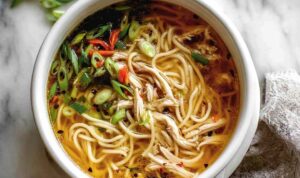



Persian Noodle Soup, or Ash-e Reshteh, is one of those recipes that fills your kitchen with the most incredible aroma and your bowl with something truly special. I first made this thick, herb-packed soup on a cold winter evening, and it instantly became a staple in my home. It is hearty, deeply flavorful, and unlike anything you will find in a typical noodle soup recipe.
I still remember standing at my stove, watching the fresh herbs wilt into a sea of golden broth and thinking this is real comfort food. This traditional ash-e reshteh is packed with legumes, noodles, and a generous pile of fresh herbs, making it a complete meal on its own. The finishing touch of tangy kashk and crispy caramelized onions takes this Persian Noodle Soup to a whole new level. Every spoonful is warming, satisfying, and packed with plant-based goodness. Note: the soup base is fully plant-based. If you use kashk as a topping, it is vegetarian but no longer vegan. Simply swap it for thick coconut yogurt to keep the whole bowl vegan.
Table of Contents
Everything You Need to Make a Perfect Bowl of Ash-e Reshteh
I always recommend soaking your chickpeas and kidney beans the night before for the creamiest, most evenly cooked legumes. If you forget, the quick-soak method works just fine. Pro tip: measure and chop all your herbs and aromatics before you turn on the stove. This Persian Noodle Soup comes together much more smoothly when everything is ready to go.
Important: This recipe requires an overnight soak for the dried chickpeas and kidney beans. Plan ahead before starting.
For the Soup:
- 1 cup dried chickpeas, soaked overnight and drained
- 1 cup dried kidney beans, soaked overnight and drained
- 1/2 cup yellow split peas, rinsed (no soaking needed)
- 1/4 cup olive oil or vegetable oil
- 2 large onions, finely chopped (1 for the soup base, 1 reserved for caramelized garnish)
- 6 cloves garlic, minced
- 1 bunch fresh parsley, roughly chopped
- 1 bunch fresh cilantro, roughly chopped
- 1 bunch fresh spinach or fresh dill, roughly chopped
- 8 cups vegetable broth
- 1/2 cup reshteh noodles or linguine, broken into 2-inch pieces
- 1 teaspoon turmeric powder
- 1 teaspoon black pepper
- Salt to taste
For the Garnish:
- 1/4 cup dried mint
- 1/4 cup olive oil or vegetable oil
- 1 cup kashk (fermented whey) or full-fat plain Greek yogurt as a substitute
Pro tip: Kashk is the star topping that gives ash-e reshteh its signature tangy depth. Look for it at any Middle Eastern grocery store. Thick full-fat Greek yogurt or sour cream works as a substitute, though the flavor will be milder. For a fully vegan bowl, use thick coconut yogurt.
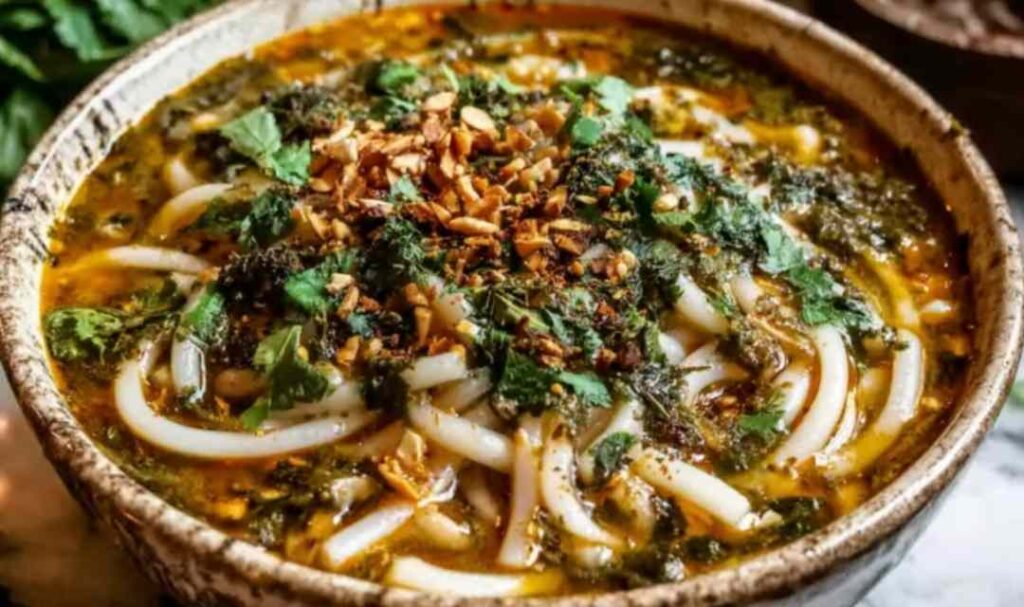
Step-by-Step Guide to Making This Hearty Persian Noodle Soup
I recommend reading through all the steps before you start so you can time the caramelized onion garnish to finish right alongside the soup. These two elements cook simultaneously and the timing makes a big difference in your final result.
Step 1: Drain the soaked chickpeas and kidney beans. Place them in a large pot with the rinsed yellow split peas and 6 cups of fresh water. Bring to a boil over high heat, then reduce to a steady simmer. Cook uncovered for about 1 hour, or until all the legumes are completely tender when pressed between two fingers. Drain and set aside.
Step 2: In the same large pot, heat 1/4 cup of oil over medium heat. Add one finely chopped onion and cook, stirring often, for 8-10 minutes until soft, translucent, and lightly golden. The onion should smell sweet, not sharp.
Step 3: Add the minced garlic and cook for 1 more minute, stirring constantly. Watch carefully here. Garlic burns fast and turns bitter if left unattended.
Step 4: Stir in the turmeric, black pepper, and all the chopped fresh herbs (parsley, cilantro, and spinach or dill). Cook for 3-4 minutes, stirring often, until the herbs have fully wilted and the mixture turns a deep, vibrant green.
Step 5: Return the cooked legumes to the pot. Pour in the 8 cups of vegetable broth. Bring to a boil, then reduce heat, cover, and simmer for 30 minutes to let the flavors come together.
Step 6 (Start this during Step 5 to save time): In a small skillet, heat 1/4 cup of oil over medium-low heat. Add the second finely chopped onion and cook slowly, stirring frequently, for 20-25 minutes until deeply caramelized and golden brown. Do not rush this step. Low and slow is what gives you that sweet, jammy flavor. Remove the onions with a slotted spoon and set aside.
Step 7: With the skillet still off the heat but the oil still warm, add the dried mint and stir for about 30 seconds until fragrant. The residual heat is enough. Adding mint to oil that is actively boiling will burn it and turn it bitter. This is your mint oil.
Step 8: Stir the broken noodles into the simmering soup. Continue to cook uncovered for 10-15 minutes until the noodles are fully tender. Season generously with salt. The soup should be very thick, almost stew-like at this point.
Step 9: Ladle the hot Persian Noodle Soup into bowls. Drizzle generously with kashk or your preferred substitute, spoon over the warm mint oil, and pile on the caramelized onions. Serve immediately while everything is hot.
Troubleshooting: If the soup looks too thin at Step 8, remove the lid and increase the simmer slightly to reduce. If it looks too thick before the noodles are done, add up to 1 cup of extra broth.
Best Ways to Serve Persian Noodle Soup at the Table
This soup pairs beautifully with simple, fresh sides that complement its rich, herby depth. Here are the best sides for Persian Noodle Soup to round out your meal.
Warm crusty bread: A thick slice of crusty sourdough or flatbread is ideal for scooping up every last drop of this thick, hearty soup.
Fresh herb platter: A traditional Persian spread includes fresh mint, basil, radishes, and green onions served on the side. The crisp, cool herbs balance the warm richness of the ash-e reshteh beautifully.
Simple cucumber yogurt: A small bowl of yogurt with diced cucumber and a pinch of dried mint adds a cooling, creamy contrast that pairs perfectly with the bold flavors of this Persian Noodle Soup.
Pickled vegetables: A small portion of Persian torshi (pickled vegetables) adds a bright, tangy pop that cuts right through the heartiness of the bowl.
More Cozy Soups and Hearty Bowls to Try Next
If this Persian Noodle Soup has you craving more deeply flavored, herb-forward bowls, there are plenty of recipes worth exploring. For another thick and comforting option loaded with vegetables, the Italian Vegetable Soup and the Easy Creamy Vegetable Soup are both crowd-pleasers that come together with simple pantry staples.
For heartier soup nights, the Healthy Orzo Vegetable Soup shares a similar noodle-and-legume comfort while the Wild Mushroom and Kale Soup brings a rich, earthy depth that pairs wonderfully as a follow-up meal the next evening.

How to Store and Reheat Your Ash-e Reshteh Like a Pro
This Persian Noodle Soup stores beautifully, making it one of the best soups for meal prep. Transfer any leftovers to an airtight container and refrigerate for up to 4 days. The soup will thicken considerably as it sits because the noodles and legumes continue to absorb liquid overnight.
To reheat, warm the ash-e reshteh gently on the stovetop over medium-low heat, stirring often. Add a splash of broth or water to restore it to your preferred consistency. Avoid high heat, which can scorch the bottom of the pot.
For freezing, this Persian Noodle Soup freezes well for up to 3 months. I recommend freezing the soup base only, without the toppings. Leave the kashk, mint oil, and caramelized onions out until you are ready to serve. Pro tip: freeze in individual single-serving portions so you can pull out exactly what you need on a busy weeknight without defrosting the whole batch.
Frequently Asked Questions About Persian Noodle Soup
Can I use canned beans instead of dried?
Yes, canned chickpeas and kidney beans work as a time-saving shortcut. Drain and rinse them thoroughly, then skip the 1-hour legume simmering step entirely. Add them directly to the pot at Step 5 along with the broth. Your cook time will be reduced by about 1 hour.
What can I use instead of kashk?
If you cannot find kashk at a Middle Eastern store, thick full-fat plain Greek yogurt or sour cream are the best substitutes. The flavor will be milder and less tangy, but still very satisfying on top of the ash-e reshteh. For a fully vegan bowl, thick coconut yogurt works well.
My soup is too thick. What should I do?
This is completely normal, especially the next day. Add a cup of warm broth or water while reheating and stir well until you reach your preferred consistency. Persian Noodle Soup is meant to be thick and hearty, so a stew-like texture is perfectly correct.
Is this recipe gluten-free?
The soup base itself contains no gluten. However, standard linguine and most commercial reshteh noodles contain wheat. To make this Persian Noodle Soup gluten-free, use a certified gluten-free rice noodle or gluten-free spaghetti broken into pieces.
Ready to Fill Your Bowl with This Cozy Persian Classic?
Making Persian Noodle Soup at home is easier than it looks, and the result is absolutely worth every step. From the pile of wilted fresh herbs to that final drizzle of fragrant mint oil and creamy kashk, this ash-e reshteh is the kind of meal that feels like a warm hug in a bowl. Whether you are making it for a cozy weeknight dinner or a special gathering, it never fails to impress. Give this Persian Noodle Soup a try this week and discover why this dish has been loved for generations.
Persian Noodle Soup (Ash-e Reshteh)

A thick, hearty Persian Noodle Soup loaded with fresh herbs, legumes, and noodles. Finished with creamy kashk, fragrant mint oil, and golden caramelized onions. The plant-based soup base is fully vegan when topped with coconut yogurt instead of kashk.
- Prep Time: 15 minutes
- Cook Time: 1 hour 45 minutes
- Total Time: 2 hours
- Yield: 6 servings 1x
- Category: Soup
- Method: Simmer, Saute
- Cuisine: Persian
Ingredients
- 1 cup dried chickpeas, soaked overnight and drained
- 1 cup dried kidney beans, soaked overnight and drained
- 1/2 cup yellow split peas, rinsed
- 1/4 cup olive oil or vegetable oil
- 2 large onions, finely chopped (1 for soup base, 1 for caramelized garnish)
- 6 cloves garlic, minced
- 1 bunch fresh parsley, roughly chopped
- 1 bunch fresh cilantro, roughly chopped
- 1 bunch fresh spinach or fresh dill, roughly chopped
- 8 cups vegetable broth
- 1/2 cup reshteh noodles or linguine, broken into 2-inch pieces
- 1 teaspoon turmeric powder
- 1 teaspoon black pepper
- Salt to taste
- 1/4 cup dried mint (for mint oil garnish)
- 1/4 cup olive oil or vegetable oil (for mint oil garnish)
- 1 cup kashk or full-fat plain Greek yogurt as substitute
Instructions
- Drain the soaked chickpeas and kidney beans. Place in a large pot with the rinsed yellow split peas and 6 cups of fresh water. Bring to a boil, reduce heat, and simmer uncovered for 1 hour until legumes are completely tender. Drain and set aside.
- In the same large pot, heat 1/4 cup oil over medium heat. Add one finely chopped onion and cook for 8-10 minutes until soft, translucent, and lightly golden.
- Add minced garlic and cook for 1 minute, stirring constantly. Do not let garlic brown.
- Stir in turmeric, black pepper, and all chopped fresh herbs. Cook for 3-4 minutes until herbs are fully wilted and the mixture is deep green.
- Return cooked legumes to the pot. Add 8 cups of vegetable broth. Bring to a boil, then reduce heat, cover, and simmer for 30 minutes.
- While the soup simmers, heat 1/4 cup oil in a small skillet over medium-low heat. Add the second chopped onion and cook slowly for 20-25 minutes, stirring frequently, until deeply caramelized and golden brown. Remove with a slotted spoon and set aside.
- Turn off the heat under the skillet. Add dried mint to the warm oil and stir for 30 seconds until fragrant. Do not add to actively boiling oil. Set aside.
- Stir broken noodles into the simmering soup. Cook uncovered for 10-15 minutes until noodles are tender. Season with salt. Soup should be very thick.
- Ladle soup into bowls. Drizzle with kashk and mint oil, then top with caramelized onions. Serve immediately.
Notes
- Overnight soak is required for dried chickpeas and kidney beans. Quick-soak method: boil for 10 minutes, let sit for 1 hour, then drain.
- Kashk can be found at Middle Eastern grocery stores. Greek yogurt or sour cream is a milder substitute. Use thick coconut yogurt for a fully vegan bowl.
- For gluten-free, substitute certified gluten-free rice noodles for the reshteh or linguine.
- The soup thickens considerably as it sits. Add a splash of warm broth when reheating to restore consistency.
- Freeze the soup base only (without toppings) for up to 3 months. Add kashk, mint oil, and onions fresh when serving.
Nutrition
- Serving Size: 1 bowl
- Calories: 380 kcal
- Sugar: 6 g
- Sodium: 720 mg
- Fat: 14 g
- Saturated Fat: 2 g
- Unsaturated Fat: 11 g
- Trans Fat: 0 g
- Carbohydrates: 48 g
- Fiber: 12 g
- Protein: 17 g
- Cholesterol: 0 mg