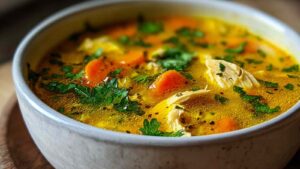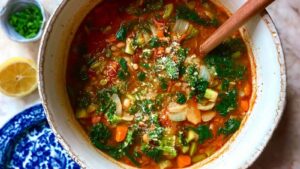


Healing Ginger Garlic Broth with Rice Noodles is my go-to remedy when I need something nourishing and restorative. I first made this vibrant soup during a particularly rough cold season when I wanted something that would warm me from the inside out while supporting my immune system. The combination of fresh ginger, garlic, and turmeric created a golden broth that tasted like medicine in the best possible way.
What makes this healing ginger garlic broth so special is how simple pantry staples transform into something truly therapeutic. The zingy ginger releases its fiery warmth while the garlic adds that savory punch we all crave when feeling under the weather. This anti-inflammatory ginger broth has become my kitchen pharmacy, ready to soothe sore throats, clear sinuses, and provide comfort on chilly days.
It’s packed with wellness benefits and tastes absolutely delicious.
Table of Contents
Nourishing Ingredients for Your Immune System
I always use fresh ginger for this recipe because the flavor is so much brighter than dried. Pro tip: Grate the ginger on the small holes of your box grater for maximum flavor extraction into the broth.
Broth Base:
- 4 cups vegetable broth
- 1 tablespoon olive oil
- 1 medium onion, finely chopped
- 4 cloves garlic, minced
- 2 tablespoons fresh ginger, grated (don’t skimp on this)
- 2 carrots, sliced thinly
- 2 celery stalks, sliced
- 1 teaspoon turmeric powder (for that golden color and anti-inflammatory properties)
- 1 tablespoon soy sauce or tamari for gluten-free
- 1 tablespoon apple cider vinegar
Noodles and Greens:
- 6 ounces rice noodles
- 2 cups spinach or kale
- Fresh cilantro for garnish
- Salt and pepper to taste
Optional Toppings:
- Sliced green onions
- Chili flakes for extra heat
Pro tip: I recommend using low-sodium vegetable broth so you can control the saltiness of this healing ginger garlic broth. You can always add more salt, but you can’t take it away.

Simple Steps to Wellness in a Bowl
I prefer preparing all ingredients before I start cooking. This nourishing ginger soup comes together quickly once you begin.
Step 1: Heat the olive oil in a large pot over medium heat until it shimmers slightly. Add the finely chopped onion and sauté for about 5 minutes, stirring occasionally. The onion should turn soft and translucent, releasing its natural sweetness. You’ll see it become slightly golden at the edges, which adds depth to your anti-inflammatory ginger broth.
Step 2: Stir in the minced garlic and grated ginger. Cook for another 1-2 minutes, stirring frequently. Your kitchen will fill with the most amazing aroma as the garlic and ginger release their essential oils. The mixture should smell fragrant and spicy, not burnt.
Pro tip: If the garlic starts to brown too quickly, lower the heat immediately. Burnt garlic will make your healing ginger garlic broth taste bitter.
Step 3: Add the thinly sliced carrots and celery to the pot. Cook for about 4-5 minutes, stirring occasionally, until the vegetables start to soften but still retain some structure. They should have a slight give when you press them with your spoon but not be completely mushy.
Troubleshooting: If your vegetables are cooking unevenly, cut them into similar-sized pieces next time for more consistent results.
Step 4: Pour in the vegetable broth, then whisk in the turmeric powder, soy sauce, and apple cider vinegar. The turmeric will turn your broth a beautiful golden color. Increase the heat to bring the mixture to a rolling boil where you see active bubbles breaking across the entire surface.
Step 5: Once boiling, reduce the heat to low and let the broth simmer gently for about 10 minutes. This allows all the flavors to meld together and deepen. The ginger and garlic will infuse the entire pot with their healing properties, creating that therapeutic quality this nourishing ginger soup is known for.
Step 6: While the broth simmers, prepare the rice noodles according to package instructions in a separate pot. Usually, this means soaking them in hot water for 5-7 minutes or boiling briefly until tender. Drain the noodles and set them aside in a warm bowl to prevent sticking.
Pro tip: Don’t overcook the rice noodles. They should be tender but still have a slight chew. They’ll soften more when you add them to the hot broth.
Step 7: After the broth has simmered for 10 minutes, add the spinach or kale directly to the pot. Stir it into the hot liquid and let it cook for another 2-3 minutes. The greens will wilt down significantly and turn a darker, more vibrant green, blending seamlessly into the broth.
Step 8: Taste the broth and adjust the seasoning with salt and pepper as needed. The soy sauce already adds saltiness, so start conservatively. Make sure each sip is perfectly balanced between savory, tangy from the vinegar, and spicy from the ginger.
Step 9: To serve, place a generous nest of cooked rice noodles in individual bowls. Ladle the hot, healing broth with all the vegetables over the noodles, making sure everyone gets plenty of carrots, celery, and greens.
Step 10: Garnish each bowl with fresh chopped cilantro and, if desired, a sprinkle of sliced green onions and chili flakes for extra flavor and color. Serve immediately while piping hot.
Perfect Pairings for This Healing Bowl
This light and nourishing healing ginger garlic broth pairs beautifully with simple sides that complement without overwhelming.
Lime Wedges on the Side: Fresh lime adds a bright, citrusy tang that cuts through the richness and enhances all the other flavors. Squeezing lime over each bowl brings everything to life and is one of the best sides for ginger garlic broth.
Warm Rustic Bowls: Serving in thick-walled, pre-warmed bowls keeps every serving piping hot longer. The rustic presentation adds to the cozy, homemade aesthetic that makes this anti-inflammatory ginger broth feel extra comforting.
Toasted Sesame Oil Drizzle: A few drops of toasted sesame oil on top add a subtle nutty aroma that mingles beautifully with the garlic and ginger. This simple addition elevates the entire bowl.
Crispy Spring Rolls: Vegetable or shrimp spring rolls provide a textural contrast with their golden, crunchy exterior against the soft noodles and tender vegetables in this nourishing ginger soup.
Herbal Tea: A cup of green tea or ginger tea alongside amplifies the wellness benefits and provides additional hydration when you’re feeling under the weather.
More Nourishing Vegetable Soup Recipes
This Healing Ginger Garlic Broth with Rice Noodles pairs wonderfully with other nutrient-rich soups that support wellness. For another anti-inflammatory favorite, the White Bean Mushroom Stew offers plant-based protein and earthy flavors. Health-conscious soup lovers will also enjoy the Autumn Wild Rice Soup Recipe, which combines hearty grains with seasonal vegetables.
For variety at the dinner table, try the comforting Wild Mushroom Caramelized Onion and Kale Soup for earthy depth, or the protein-packed White Bean Turkey Chili for a heartier meal. Serve alongside Caprese Quick Bread or Orange Cardamom Bread for a complete nourishing experience.

Storing Your Wellness Remedy
Store any leftover healing ginger garlic broth and noodles separately in airtight containers in the refrigerator for up to 4 days. This prevents the noodles from becoming waterlogged and mushy. Keep the broth in one container and the cooked noodles in another, both sealed tightly.
When ready to enjoy again, reheat the broth slowly on the stovetop over medium-low heat until steaming hot. Place the desired amount of noodles in your serving bowl, then ladle the hot broth over them. The heat from the broth will warm the noodles perfectly. I recommend adding a splash of fresh vegetable broth if the soup has thickened too much in the fridge.
Pro tip: You can freeze the broth portion (without the noodles) in freezer-safe containers for up to 3 months. The ginger and garlic flavors actually intensify slightly during freezing. When ready to use, thaw overnight in the refrigerator, reheat gently, and serve with freshly cooked rice noodles for the best texture. Keep garnishes like cilantro and green onions in separate sealed bags in the fridge to preserve their freshness and color for this anti-inflammatory ginger broth.
Common Questions About This Healing Recipe
Can I add protein to make it more filling?
Absolutely! Add cubed tofu, shredded chicken, or cooked shrimp during the last few minutes of simmering. This transforms the broth into a complete meal while maintaining its healing properties.
What if I don’t have fresh ginger?
Fresh ginger is really important for this recipe’s flavor profile. Ground dried ginger won’t give you the same bright, zingy taste. If you must substitute, use about 1 teaspoon of dried ginger, but the flavor will be different.
Can I use different vegetables?
Yes! Mushrooms, bok choy, bell peppers, or zucchini all work beautifully in this healing ginger garlic broth. Add heartier vegetables with the carrots and lighter ones like mushrooms or bok choy toward the end.
Wellness in Every Warming Spoonful
This healing ginger garlic broth with rice noodles proves that food can truly be medicine. With just 45 minutes and simple, wholesome ingredients, you can create a nourishing soup that supports your immune system while tasting absolutely delicious. The combination of anti-inflammatory ginger and turmeric, immune-boosting garlic, and nutrient-rich vegetables makes this nourishing ginger soup a powerful ally for your health.
Healing Ginger Garlic Broth with Rice Noodles

A vibrant, soul-warming broth bursting with ginger, garlic, and fresh vegetables paired with soft rice noodles. Anti-inflammatory and nourishing.
- Prep Time: 15 minutes
- Cook Time: 30 minutes
- Total Time: 45 minutes
- Yield: 4 servings 1x
- Category: Soup
- Method: Stovetop, Simmer
- Cuisine: Asian-Inspired
Ingredients
- 4 cups vegetable broth
- 1 tablespoon olive oil
- 1 medium onion, finely chopped
- 4 cloves garlic, minced
- 2 tablespoons fresh ginger, grated
- 2 carrots, sliced thinly
- 2 celery stalks, sliced
- 1 teaspoon turmeric powder
- 1 tablespoon soy sauce (or tamari for gluten-free)
- 1 tablespoon apple cider vinegar
- 6 ounces rice noodles
- 2 cups spinach or kale
- Fresh cilantro for garnish
- Salt and pepper to taste
- Optional: Sliced green onions and chili flakes for serving
Instructions
- Heat olive oil in large pot over medium heat. Add chopped onion and sauté for 5 minutes until translucent, allowing natural sweetness to bloom.
- Stir in minced garlic and grated ginger, cooking for 1-2 minutes until fragrant and aromatic.
- Add sliced carrots and celery to pot. Cook for 4-5 minutes, stirring occasionally, until vegetables are just tender but still retain structure.
- Pour in vegetable broth, then whisk in turmeric powder, soy sauce, and apple cider vinegar. Increase heat to bring mixture to rolling boil.
- Once boiling, reduce heat to low and simmer for 10 minutes, allowing flavors to meld and deepen.
- While broth simmers, prepare rice noodles according to package instructions. Drain and set aside in warm bowl to prevent sticking.
- After 10-minute simmer, add spinach or kale to pot. Let greens cook for 2-3 minutes until wilted and blended into broth.
- Taste broth and adjust with salt and pepper as desired, ensuring each sip is perfectly balanced.
- Place nest of cooked rice noodles in individual bowls. Ladle hot broth and vegetables over noodles.
- Garnish with fresh cilantro and, if desired, sprinkle of sliced green onions and chili flakes for extra flavor and color.
Notes
- Fresh ginger is essential for bright, zingy flavor that dried cannot replicate.
- Store broth and noodles separately to prevent noodles from becoming soggy.
- Can add tofu, chicken, or shrimp for extra protein.
- Mushrooms or bok choy make excellent vegetable additions.
- Use low-sodium broth to control saltiness.
Nutrition
- Serving Size: 1 serving
- Calories: 300 kcal
- Sugar: 5 g
- Sodium: 680 mg
- Fat: 5 g
- Saturated Fat: 1 g
- Unsaturated Fat: 4 g
- Trans Fat: 0 g
- Carbohydrates: 58 g
- Fiber: 4 g
- Protein: 7 g
- Cholesterol: 0 mg