
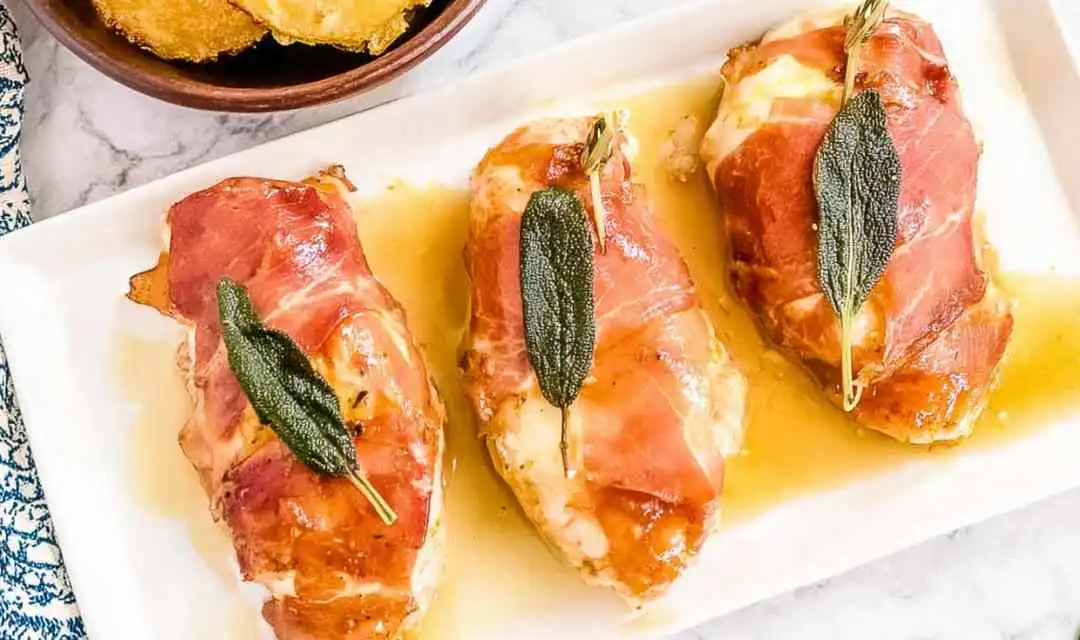
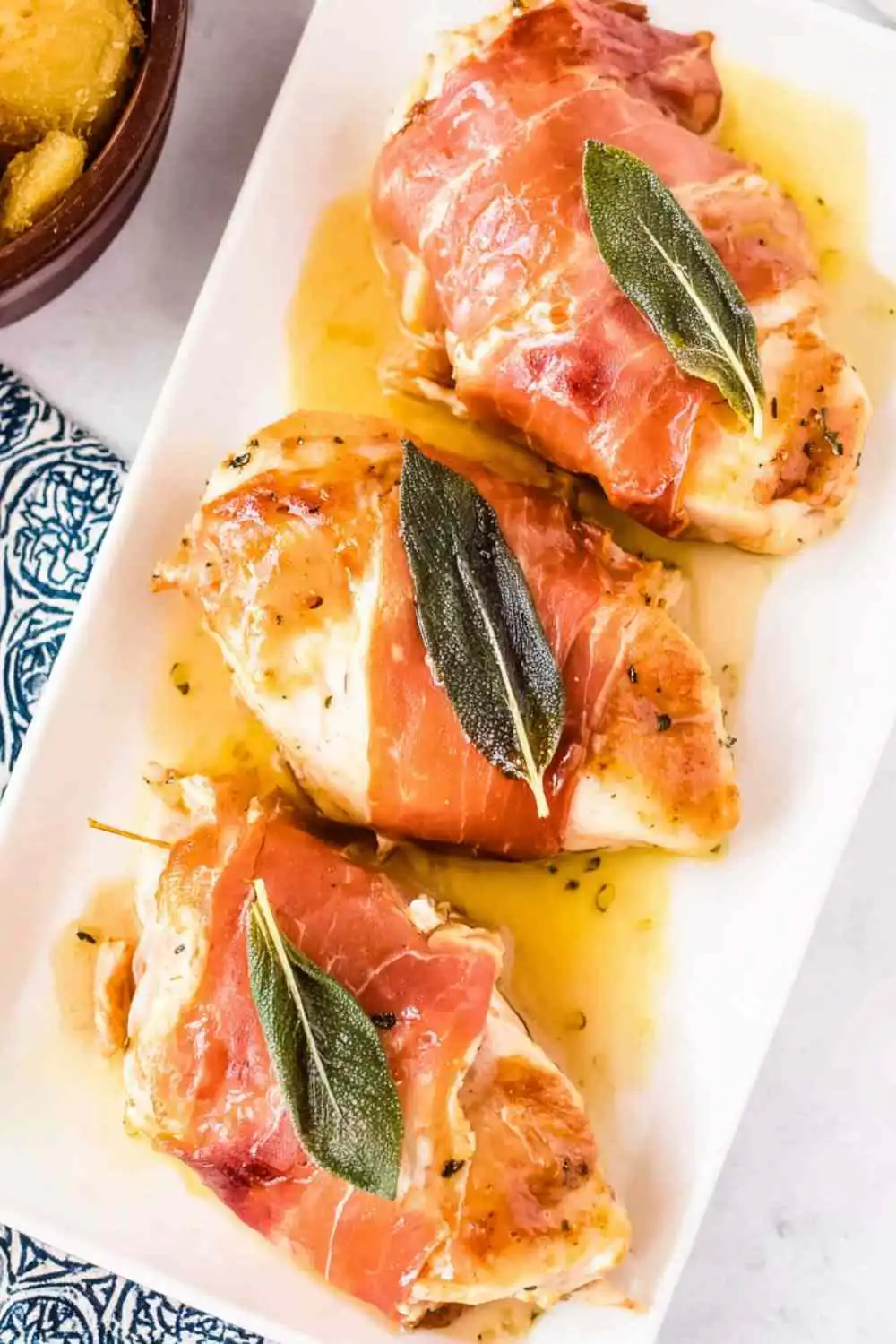
Chicken Saltimbocca is one of those Italian classics that looks incredibly impressive but comes together in just 30 minutes. I first made this dish on a weeknight when I wanted something restaurant-worthy without the fuss, and it has become a regular in my kitchen rotation ever since.
I still remember the first time I laid that thin slice of prosciutto over golden chicken and watched it crisp up in a hot pan – the aroma of sage and butter filling the whole kitchen in seconds. What makes Chicken Saltimbocca so special is how a handful of simple, quality ingredients create something truly memorable. The crispy dry-cured ham, the fragrant fresh sage, and that silky white wine butter sauce all come together into one beautiful Italian dinner. This prosciutto chicken recipe is elegant enough for guests but easy enough for a Tuesday night.
Table of Contents
What You Need to Make This Italian Classic
I always say that Chicken Saltimbocca is only as good as its ingredients – keep them simple and quality-forward. Pro tip: use authentic Parma ham or prosciutto for the best flavor, and always choose fresh sage leaves rather than dried.
For the Chicken:
- 2 boneless, skinless chicken breasts, sliced lengthwise into 4 thin pieces total
- 4 slices dry-cured ham (Parma ham or prosciutto – both work beautifully)
- 4 fresh sage leaves (larger, flat leaves stay put during searing and crisp up perfectly)
- 2 tablespoons all-purpose flour
- 2 tablespoons unsalted butter
- 2 tablespoons olive oil
For the White Wine Butter Sauce:
- 1 cup dry white wine – Sauvignon Blanc or Pinot Grigio recommended (substitute equal amount of chicken broth for an alcohol-free version)
- 3 tablespoons unsalted butter
- Kosher salt, to taste
- Ground black pepper, to taste
Equipment needed: large skillet or saute pan, parchment paper, meat mallet or heavy rolling pin, flat plate for flour dredging, toothpicks, spatula, whisk.
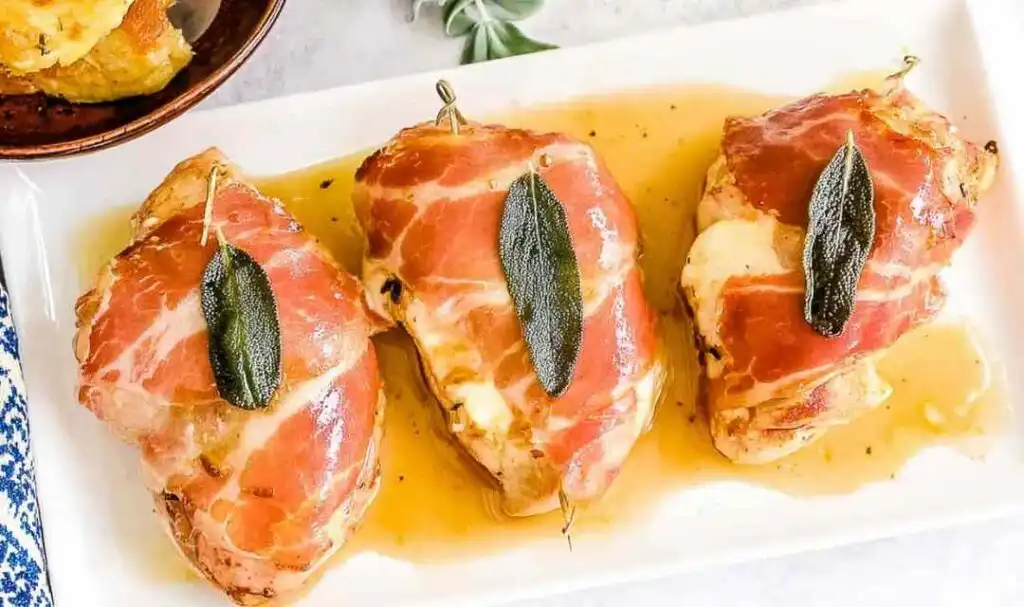
How to Cook Chicken Saltimbocca Step by Step
I recommend reading all the steps before you start – this Chicken Saltimbocca recipe moves quickly once the pan is hot, and a little preparation makes everything run smoothly.
Step 1: Slice each chicken breast lengthwise into 2 thin pieces. You will have 4 thin slices total.
Step 2: Place each slice between two sheets of parchment paper and pound flat with a meat mallet until thin and even throughout. This step is not optional – flat, even chicken cooks consistently and gives you the perfect surface for the ham and sage to adhere to.
Step 3: Lay one slice of dry-cured ham flat on top of each chicken piece. Place one fresh sage leaf on top of the ham. Secure both firmly to the chicken using a toothpick. This keeps everything in place during searing and flipping. Do not skip the toothpick – the ham will slide off in the pan without it.
Step 4: Pour flour onto a flat plate. Dredge only the underside (the non-ham side) of each chicken piece through the flour. Shake off all excess flour thoroughly – too much flour will make the sauce gluey rather than silky.
Step 5: Heat butter and olive oil together in a large skillet over high heat until the butter is fully melted and the pan is very hot. A properly preheated pan is the single most important step – it crisps the ham immediately on contact instead of letting it steam and turn rubbery.
Step 6: Add the chicken pieces ham and sage-side down first. Cook for 3 to 4 minutes until the ham is golden brown and crispy. You will see the edges turn deep golden – that is your visual cue to flip.
Step 7: Flip each piece carefully with a spatula. Season with black pepper only at this stage – do not add salt here, as the dry-cured ham is already very salty and will season the dish naturally. Cook for 2 more minutes on the second side.
Step 8: Pour in the white wine. Reduce heat to medium-low. Cook for 3 to 4 minutes, using a wooden spoon to scrape up all the browned bits from the bottom of the pan. Those browned bits are concentrated flavor – do not skip this. Verify the chicken has reached 165 degrees F internally before removing.
Step 9: Transfer the cooked chicken to a serving plate. Add the remaining 3 tablespoons of butter to the wine remaining in the pan. Whisk quickly and continuously until fully emulsified and smooth. If the butter goes in too slowly or the heat is too high, the sauce will separate and look greasy – keep whisking and keep the heat low.
Step 10: Let the sauce reduce for 1 to 2 more minutes until slightly thickened. Taste and season with salt and pepper as needed. Drizzle the sauce generously over each piece of chicken. Remove all toothpicks before serving.
Best Ways to Serve Chicken Saltimbocca Tonight
This dish shines alongside sides that soak up every drop of that white wine butter sauce. Here are the best sides for Chicken Saltimbocca:
Creamy mashed potatoes: The rich, silky pan sauce soaks right into fluffy mashed potatoes – a classic combination that works every time.
Roasted asparagus: The slight bitterness of asparagus cuts through the richness of the butter sauce and adds beautiful color to the plate.
Pasta – fettuccine or linguine: Toss the pasta directly in the pan sauce for a complete Italian dinner that feels fully restaurant-worthy.
Sauteed spinach or broccolini: Light, quick-cooking greens balance the richness of this dish without competing with the bold ham and sage flavors.
Warm crusty bread: Essential for mopping up every last drop of that white wine butter sauce – do not skip it.
A glass of Pinot Grigio or Sauvignon Blanc: The same wine used to build the sauce makes a natural and perfect sipping pairing alongside.
More Italian-Inspired Chicken Dinners to Try Next
Chicken Saltimbocca pairs naturally with other elegant yet approachable chicken dishes. If the crispy pan-seared method won your heart here, the Chicken Florentine uses a similar one-pan technique with a creamy spinach sauce that feels equally restaurant-worthy. For another Italian classic with a rich wine-based sauce, the Crockpot Chicken Marsala and the Stuffed Chicken Marsala are both deeply satisfying options.
When serving Chicken Saltimbocca over pasta, try pairing it alongside a bowl of Lemon Chicken Pasta for a bright, citrusy contrast to the buttery sage sauce – or serve the whole spread with warm bread inspired by the Dutch Oven Cheddar Bread for a complete Italian-style dinner table.

Keeping Your Chicken Saltimbocca Fresh
Chicken Saltimbocca is best enjoyed immediately while the ham is still crispy, but leftovers store well. Place cooled chicken and sauce in an airtight container and refrigerate for up to 3 days. Note that the ham will soften after refrigerating – it will still taste great but will lose its initial crunch. For longer storage, freeze in a freezer-safe container for up to 3 months and thaw overnight in the refrigerator before reheating.
To reheat, warm gently in a skillet over medium-low heat with a splash of white wine or chicken broth to revive the sauce. Microwave in 30-second intervals also works well. The ham will not re-crisp fully after reheating, but the flavors remain delicious.
Pro tip: if making this for a dinner party, pound, prep, and assemble the chicken earlier in the day and refrigerate it on the plate. Sear and sauce right before serving for the freshest results.
Chicken Saltimbocca – Your Questions Answered
Can I use chicken thighs instead of chicken breasts?
Chicken breasts are strongly recommended for this recipe. The flat, even surface after pounding is ideal for securing the ham and sage, and it cooks evenly all the way through. Thighs are thicker and less uniform, making them much harder to work with in this preparation.
My sauce looks greasy and separated – what happened?
This usually happens when butter is added over heat that is too high or added too slowly. Keep the heat on low and whisk quickly and continuously as you add each tablespoon of butter. This emulsifies it into a smooth, glossy sauce rather than a greasy one.
Can I make Chicken Saltimbocca without wine?
Yes – substitute an equal amount (1 cup) of chicken broth for a completely alcohol-free version. The sauce will be slightly lighter in flavor but still very tasty.
The dish came out too salty – how do I prevent that?
Do not add any salt until the very end of cooking, after the sauce has reduced and you can taste it properly. The dry-cured ham seasons the dish significantly on its own. If it is still too salty, a small squeeze of fresh lemon juice stirred into the finished sauce can help balance it nicely.
Can I add cheese to this recipe?
Yes – for a Roman-style variation, tuck a thin slice of fontina or Gruyere between the sage leaf and the ham before securing with the toothpick. It melts beautifully and adds a richer, slightly more indulgent layer of flavor.
Go Make This Tonight
Chicken Saltimbocca is proof that Italian cooking at its best is really about simplicity done right. With just a handful of quality ingredients and one pan, you get a dish that looks and tastes like it came straight out of a Roman trattoria. The crispy prosciutto, the fragrant sage, and that silky buttery white wine sauce are genuinely something special together.
Whether you are cooking for a casual weeknight dinner or trying to impress guests on the weekend, this recipe delivers every single time without stressing you out. Try Chicken Saltimbocca tonight and see just how good simple Italian cooking can really be!
Chicken Saltimbocca
A classic Italian one-pan dish featuring thin pounded chicken breast slices topped with crispy dry-cured ham and fresh sage leaves – seared golden in butter and olive oil, then finished in a silky white wine butter sauce. Elegant, deeply flavorful, and ready in just 30 minutes.
- Prep Time: 10 minutes
- Cook Time: 20 minutes
- Total Time: 30 minutes
- Yield: 4 servings 1x
- Category: Dinner
- Method: Pan-Sear, Saute
- Cuisine: Italian
Ingredients
- 2 boneless, skinless chicken breasts, sliced lengthwise into 4 thin pieces total
- 4 slices dry-cured ham (Parma ham or prosciutto)
- 4 fresh sage leaves
- 2 tablespoons all-purpose flour
- 2 tablespoons unsalted butter
- 2 tablespoons olive oil
- 1 cup dry white wine (Sauvignon Blanc or Pinot Grigio recommended)
- 3 tablespoons unsalted butter
- Kosher salt, to taste
- Ground black pepper, to taste
Instructions
- Slice each chicken breast lengthwise into 2 thin pieces for 4 slices total.
- Place each slice between two sheets of parchment paper and pound flat with a meat mallet until thin and even throughout.
- Lay one slice of dry-cured ham flat on top of each chicken piece. Place one fresh sage leaf on top of the ham. Secure both firmly to the chicken using a toothpick.
- Pour flour onto a flat plate. Dredge only the underside (non-ham side) of each chicken piece through the flour. Shake off all excess flour.
- Heat butter and olive oil together in a large skillet over high heat until fully melted and very hot.
- Add the chicken pieces ham and sage-side down first. Cook for 3 to 4 minutes until the ham is golden brown and crispy.
- Flip each piece carefully with a spatula. Season with black pepper only. Cook for 2 more minutes on the second side.
- Pour in the white wine. Reduce heat to medium-low. Cook for 3 to 4 minutes, scraping up all browned bits from the bottom of the pan. Verify chicken has reached 165 degrees F internally.
- Transfer cooked chicken to a serving plate. Add remaining 3 tablespoons of butter to the wine in the pan. Whisk quickly and continuously until fully emulsified and smooth.
- Let the sauce reduce for 1 to 2 more minutes until slightly thickened. Taste and season with salt and pepper as needed. Drizzle over each piece of chicken. Remove all toothpicks before serving.
Notes
- Do not add salt until the very end – the dry-cured ham is very salty and seasons the dish naturally during cooking.
- Serve immediately while the ham is still crispy – it softens quickly once it sits in the sauce.
- For a Roman-style variation, add a thin slice of fontina or Gruyere cheese between the sage leaf and the ham before securing with toothpicks.
- Substitute 1 cup of chicken broth for white wine for a completely alcohol-free version.
- Always remove all toothpicks before plating and serving.
Nutrition
- Serving Size: 1 piece with sauce
- Calories: 410 kcal
- Sugar: 1 g
- Sodium: 543 mg
- Fat: 26 g
- Saturated Fat: 11 g
- Unsaturated Fat: 15 g
- Trans Fat: 0 g
- Carbohydrates: 4 g
- Fiber: 1 g
- Protein: 29 g
- Cholesterol: 118 mg