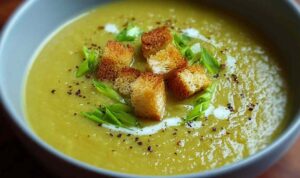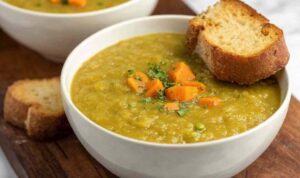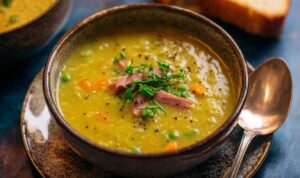

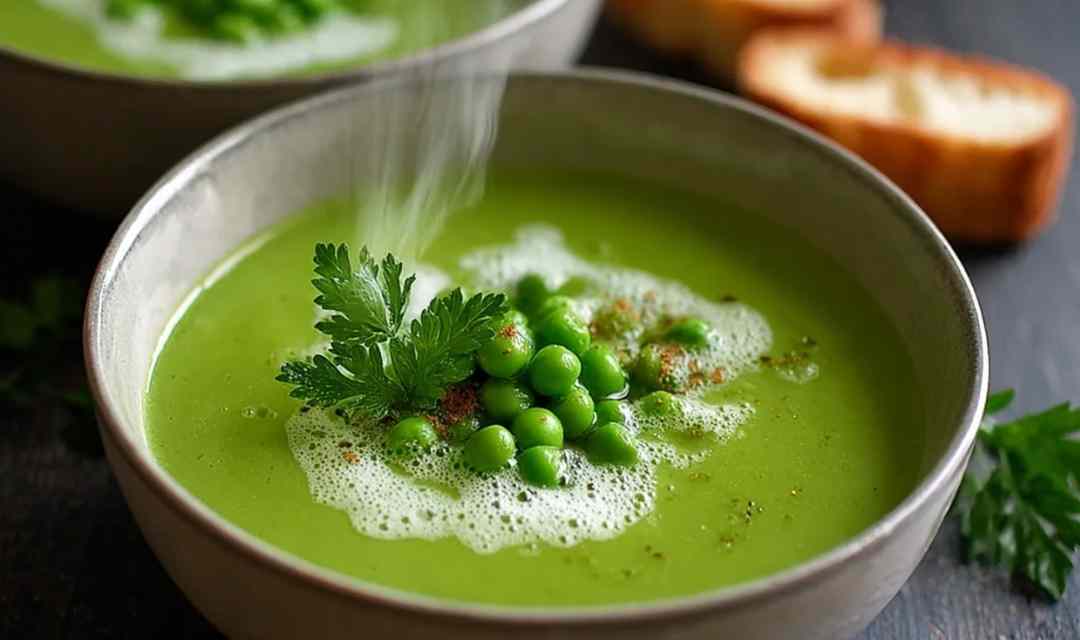
The best pea soup recipe starts with simple ingredients and transforms into something truly satisfying. I’ve been making this split pea soup for years, and it delivers that perfect balance of sweet, savory, and velvety texture that makes you want a second bowl. Whether you’re cooking for your family on a chilly evening or meal prepping for the week, this recipe is comfort food done right.
I still remember making split pea soup from scratch for the first time at my grandmother’s house one February afternoon. I was skeptical that dried peas could create something so creamy without any cream at all. But as the soup simmered and the kitchen filled with the warm aroma of vegetables and herbs, I understood why she made it every winter. This pea soup recipe has become my go-to when I need something wholesome, filling, and deeply comforting. The secret is the slow simmer that breaks down the peas naturally, creating that signature thick texture. It’s incredibly budget-friendly and nutritious, packed with protein and fiber that keeps you satisfied for hours.
Table of Contents
What You’ll Need to Make This Pea Soup
Start with quality split peas and fresh vegetables for the best flavor. Rinsing your dried peas thoroughly removes any debris and helps them cook more evenly. Here’s everything you need:
- 2 tablespoons unsalted butter (unsalted lets you control sodium levels)
- 1 medium onion, finely chopped
- 2 cloves garlic, minced
- 2 medium carrots, diced (adds natural sweetness)
- 2 celery stalks, diced
- 1 teaspoon dried thyme
- 1 bay leaf (essential for depth of flavor)
- 1 pound dried split peas, rinsed and picked over
- 1 meaty ham bone or 1½ cups diced cooked ham (optional for vegetarian version; note that ham bone provides richer flavor)
- 6 cups low-sodium chicken or vegetable broth
- 2 cups water
- ¾ teaspoon salt, plus more to taste
- Freshly ground black pepper to taste
- Chopped fresh parsley for garnish (optional but adds freshness)
Equipment needed: Large pot or Dutch oven (at least 5-quart capacity), immersion blender or regular blender
Ingredient note: A ham bone adds incredible depth and subtle smokiness that elevates this soup. If making it vegetarian, add a splash of liquid smoke for similar complexity.
How to Make the Best Pea Soup Step by Step
Take your time with the vegetable sauté at the beginning—this step builds the flavor foundation for your entire soup.
Step 1: Melt the butter in a large pot or Dutch oven over medium heat. Add your finely chopped onion and cook for 3 to 4 minutes until it becomes translucent and fragrant. The onion should soften and smell sweet.
Step 2: Stir in the minced garlic, diced carrots, and diced celery. Cook everything together for 5 minutes, stirring occasionally. The vegetables should begin to soften and the garlic will become aromatic. Watch the garlic closely so it doesn’t burn and turn bitter.
Step 3: Add the dried thyme and bay leaf to the pot, stirring to coat the vegetables with the herbs. Add your rinsed split peas, mixing them well with the vegetable base so every pea gets coated with those flavors.
Step 4: Place your ham bone or diced ham into the pot if using. Pour in 6 cups of broth and 2 cups of water. Increase the heat to medium-high and bring everything to a boil—you’ll see bubbles breaking the surface consistently.
Step 5: Once boiling, reduce the heat to low and cover the pot. Let your pea soup simmer gently for 1 hour 15 minutes to 1 hour 30 minutes, stirring every 15 minutes. The peas should become completely soft and break apart easily when pressed, and the soup will thicken considerably to a porridge-like consistency. If the soup gets too thick during cooking, add water ¼ cup at a time.
Step 6: Remove and discard the bay leaf and ham bone if you used one. For a creamier texture, use an immersion blender to puree about half the soup directly in the pot—this creates the best balance of creamy and chunky. Alternatively, transfer 2 to 3 cups to a regular blender, puree until smooth, and stir it back in. When using a regular blender, remove the center cap and cover with a kitchen towel to allow steam to escape safely.
Step 7: Season your soup with salt and freshly ground black pepper to taste. Start with ¾ teaspoon of salt if you used low-sodium broth, and adjust from there. Ladle into bowls and top with fresh chopped parsley if desired.
Cooking note: The soup will continue to thicken as it sits. If serving the next day, you’ll need to thin it with additional broth or water when reheating.
Perfect Pairings for Your Pea Soup
This pea soup pairs beautifully with crusty bread and fresh salads. Here are my favorite combinations:
Crusty Sourdough Bread: The tangy flavor and chewy texture of sourdough complements the creamy richness of pea soup perfectly. Toast it and spread with butter for an even better experience.
Simple Green Salad: A crisp salad with vinaigrette cuts through the soup’s thickness and adds freshness. Arugula or mixed greens with lemon dressing work beautifully.
Cornbread: The slight sweetness of cornbread balances the savory depth of the soup, and it’s perfect for soaking up every last drop.
Roasted Root Vegetables: Serve alongside roasted parsnips or sweet potatoes for a complete vegetarian meal that’s hearty and satisfying.
Grilled Cheese Sandwich: A classic pairing that never fails. The crispy, buttery sandwich is the ultimate comfort food companion to a warm bowl of pea soup.
Discover More Delicious Pea Soup Variations
This well-balanced pea soup recipe offers the perfect introduction to split pea cooking, but exploring specialized variations adds exciting options to the repertoire. For completely hands-off preparation, the Slow Cooker Split Pea Soup creates restaurant-quality results while busy with other tasks throughout the day. Those craving bolder flavors will appreciate the Split Pea Soup Stovetop, where crispy bacon and smoked paprika deliver incredible depth in just 70 minutes.
Plant-based eaters have wonderful options too, including the Perfect Vegan Pea Soup with hearty red potatoes and the silky Creamy Yellow Split Pea Soup that showcases the natural sweetness of yellow split peas. Each recipe proves that simple ingredients create extraordinary comfort food when prepared with care and patience.

Storing Your Homemade Pea Soup
Store leftover pea soup in an airtight container in the refrigerator for up to 3 days. Let the soup cool completely before transferring it to prevent condensation. The soup will thicken significantly in the fridge, which is completely normal.
When reheating, add ¼ to ½ cup of water or broth to achieve your desired consistency. Heat gently on the stovetop over medium-low heat, stirring frequently to prevent sticking. You can also reheat individual portions in the microwave for 2 to 3 minutes, stirring halfway through.
Freezer tip: This pea soup freezes beautifully for up to 3 months. Freeze in portion-sized containers for easy lunches. Thaw overnight in the refrigerator before reheating. The texture remains creamy after freezing, making it perfect for meal prep.
Common Questions About Making Pea Soup
Can I make this pea soup in a slow cooker?
Yes! Add all ingredients to your slow cooker and cook on low for 7 to 8 hours or high for 4 to 5 hours. The split peas will break down beautifully and create that thick, creamy texture naturally.
Why is my pea soup too thin?
If your pea soup turns out thinner than you’d like, simmer it uncovered for an additional 15 to 20 minutes to evaporate excess liquid. You can also blend more of the soup to release additional starch from the peas, which naturally thickens it.
Can I substitute fresh peas for dried split peas?
Fresh or frozen peas won’t work the same way in this recipe. Dried split peas break down during cooking to create that signature thick, creamy texture. Fresh peas would remain whole and create a completely different soup.
Do I need to soak split peas before cooking?
No, split peas don’t require soaking. Unlike whole dried beans, split peas cook relatively quickly and soften completely during the simmering process.
How do I prevent my pea soup from burning on the bottom?
Stir your soup every 15 minutes during the simmering process and make sure the heat is set to low. Using a heavy-bottomed pot or Dutch oven also helps distribute heat evenly and prevents scorching.
Ready to Make This Delicious Pea Soup?
This pea soup recipe proves that simple ingredients can create something truly satisfying. With straightforward steps and maximum flavor, you’ll have a nourishing meal that satisfies everyone at your table. The creamy texture, savory depth, and wholesome ingredients make this soup a winner every time. Try this recipe and discover why split pea soup is beloved comfort food. Your kitchen will smell wonderful and your family will be asking for seconds.
Best Pea Soup Recipe

A well-made pea soup combines sweetness, savory depth, and a velvety texture. This recipe delivers a warm, comforting bowl that perfectly balances flavor and texture with simple ingredients and straightforward technique.
- Prep Time: 15 minutes
- Cook Time: 1 hour 30 minutes
- Total Time: 1 hour 45 minutes
- Yield: 6 servings 1x
- Category: Soup
- Method: Simmer
- Cuisine: American
Ingredients
- 2 tablespoons unsalted butter
- 1 medium onion, finely chopped
- 2 cloves garlic, minced
- 2 medium carrots, diced
- 2 celery stalks, diced
- 1 teaspoon dried thyme
- 1 bay leaf
- 1 pound dried split peas, rinsed and picked over
- 1 meaty ham bone or 1½ cups diced cooked ham (optional; ham bone provides richer flavor)
- 6 cups low-sodium chicken or vegetable broth
- 2 cups water
- ¾ teaspoon salt, plus more to taste
- Freshly ground black pepper to taste
- Chopped fresh parsley for garnish (optional)
Instructions
- Melt butter in a large pot or Dutch oven (at least 5-quart capacity) over medium heat. Add chopped onion and cook until translucent, about 3 to 4 minutes. Stir in garlic, carrots, and celery. Cook for 5 minutes until vegetables soften.
- Stir in dried thyme and bay leaf. Add rinsed split peas and mix well with vegetables to coat evenly.
- Place ham bone or diced ham in pot if using. Pour in broth and water. Bring to a boil over medium-high heat.
- Reduce heat to low and cover. Simmer for 1 hour 15 minutes to 1 hour 30 minutes, stirring every 15 minutes, until peas are completely soft and break apart easily. Soup will thicken to porridge-like consistency. Add water ¼ cup at a time if soup becomes too thick.
- Remove bay leaf and ham bone. Use immersion blender to puree about half of soup for best creamy-chunky balance, or transfer 2 to 3 cups to regular blender, puree until smooth, and return to pot. If using regular blender, remove center cap and cover with kitchen towel to allow steam to escape.
- Season with ¾ teaspoon salt (if using low-sodium broth) and black pepper to taste. Adjust seasoning as needed. Ladle into bowls and garnish with fresh parsley if desired.
Notes
- For vegetarian version, omit ham and use vegetable broth. Add splash of liquid smoke for depth.
- Soup thickens significantly as it sits. Thin with water or broth when reheating.
- Freezes well for up to 3 months in airtight containers.
- Use heavy-bottomed pot to prevent burning and stir every 15 minutes during simmering.
- Split peas don’t require soaking before cooking.
- Ham bone provides richer flavor than diced ham, but both work well.
Nutrition
- Serving Size: 1.5 cups
- Calories: 285 kcal
- Sugar: 6 g
- Sodium: 520 mg
- Fat: 5 g
- Saturated Fat: 3 g
- Unsaturated Fat: 2 g
- Trans Fat: 0 g
- Carbohydrates: 45 g
- Fiber: 16 g
- Protein: 18 g
- Cholesterol: 10 mg