
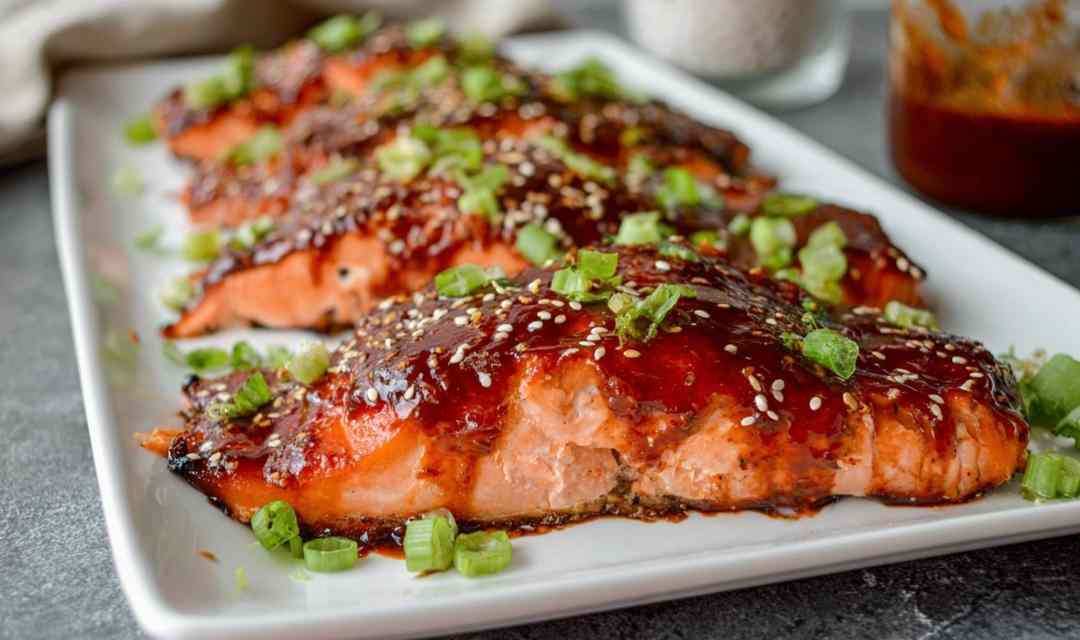
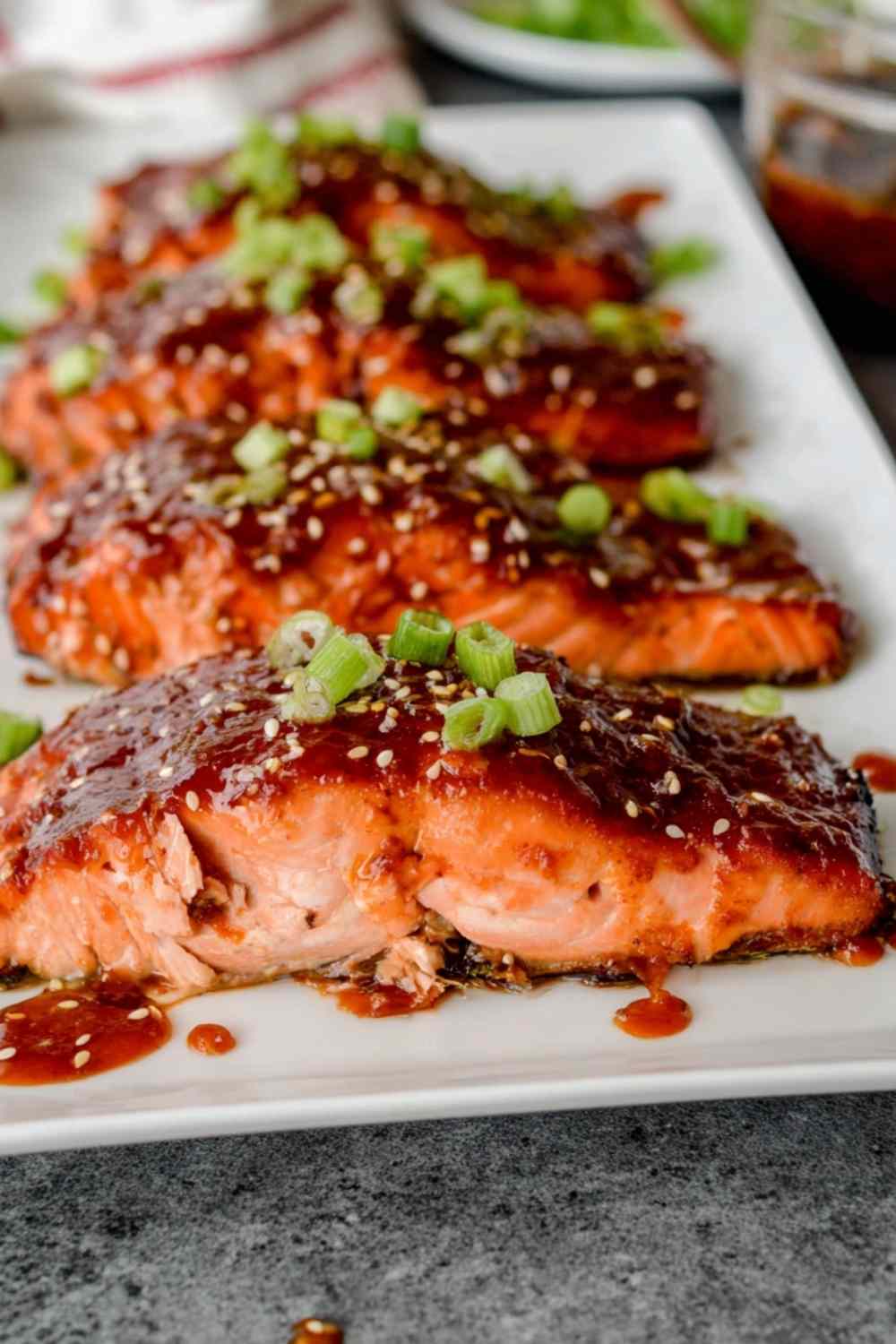
Gochujang Salmon is the bold, flavor-packed weeknight dinner that changed how I think about a simple salmon fillet. This Korean-inspired glaze comes together in minutes and delivers spicy, savory, and slightly sweet flavor that tastes anything but quick.
I first made this on a Tuesday night when I had a pound of salmon and zero patience for a complicated dinner. I had a jar of gochujang sitting in the back of my fridge and decided to throw a quick glaze together. It worked so well that I have made it almost every week since. The broiler does the heavy lifting here, caramelizing that glossy red glaze right onto the fish without any marinating or fuss. If you want a high-protein, healthy dinner that genuinely delivers on flavor, this gochujang salmon recipe is exactly that.
Table of Contents
Everything You Need for This Gochujang Salmon Glaze
I always keep gochujang on hand because a little goes a long way and it transforms simple proteins fast. Pro tip: if you are new to gochujang, start with 1.5 to 2 tablespoons instead of the full 3 and taste the glaze before adding more. Heat levels vary a lot between brands.
- 3 tablespoons gochujang (Korean chili paste, mild or regular)
- 1/2 teaspoon garlic powder
- 2 teaspoons low-sodium soy sauce
- 2 teaspoons honey (or maple syrup as a swap)
- 1 tablespoon rice wine vinegar
- 1 1/2 teaspoons sesame oil
- 1/2 teaspoon salt
- 1/4 teaspoon black pepper
- 1 to 1 1/2 lbs salmon fillets, skin-on (cut into 4 to 6 oz portions)
- Sesame seeds for garnish
- Green onion, thinly sliced, for garnish
Personal tip: Wild-caught salmon gives the best flavor here. If you are going with farmed salmon, look for the ASC (Aquaculture Stewardship Council) logo to make sure it is responsibly sourced.
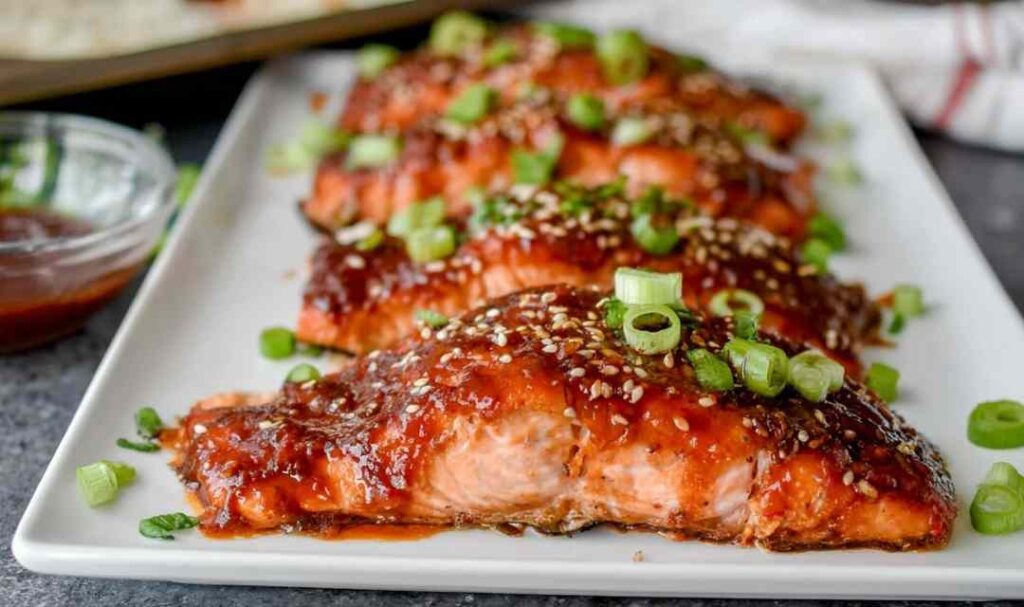
How to Broil Gochujang Salmon to Perfection
I prefer broiling over baking for this recipe because the high direct heat caramelizes the gochujang glaze fast and locks in moisture. Here is exactly how to do it without burning or undercooking.
Step 1: Line a baking sheet with foil. In a mixing bowl, whisk together the gochujang, garlic powder, soy sauce, honey, rice wine vinegar, sesame oil, salt, and pepper until the glaze is smooth and fully combined.
Step 2: Pat the salmon fillets completely dry with paper towels. This is not a step to skip. Dry salmon means the glaze sticks properly and you get a better finish on the surface. Place fillets skin-side down on the foil-lined baking sheet.
Step 3: Spoon or brush the gochujang glaze evenly over each fillet, coating every edge.
Step 4: Position your oven rack 6 to 8 inches from the broiler element. Preheat the broiler on high and wait until it is fully hot before putting the pan in. A cold broiler means uneven cooking.
Step 5: Slide the baking sheet in and broil for 5 to 7 minutes, rotating the pan halfway through. Watch closely after the 3-minute mark. If the glaze is darkening too fast, move the pan down one rack immediately. Thinner fillets (under 3/4 inch) may only need 4 to 5 minutes total.
Step 6: The gochujang salmon is done when it flakes easily with a fork. Use a meat thermometer for accuracy: 125 to 130 degrees F for medium-rare, 145 degrees F for fully cooked through.
Step 7: Let the salmon rest on the pan for 5 minutes before serving. Garnish with sesame seeds and sliced green onion.
Air fryer option: Preheat to 400 degrees F, line the tray or basket with parchment, and cook for 4 to 5 minutes depending on fillet thickness.
What to Serve With Gochujang Salmon Tonight
This salmon pairs best with clean, simple sides that let the bold Korean-inspired glaze shine. Here are the best sides for gochujang salmon:
Steamed jasmine or brown rice: The neutral base soaks up extra glaze from the plate and rounds out the protein perfectly.
Cucumber salad with rice vinegar: The cool crunch cuts right through the heat of the gochujang salmon and refreshes the palate between bites.
Roasted broccoli or bok choy: Both hold up well under heat and bring a slight bitterness that balances the sweet and spicy glaze.
Miso soup: A warm bowl alongside the salmon makes this feel like a full Korean-inspired meal without any extra effort.
Cauliflower rice: A low-carb alternative that keeps the meal light and still soaks up the extra sauce well.
More Easy Salmon and Weeknight Dinner Recipes
If this gochujang salmon hit the spot, there are plenty of bold and protein-packed dinners worth exploring next. The Spicy Salmon Sushi Bake uses similar Asian-inspired flavors and is just as simple to pull together for a crowd. For nights when you want something just as fast but with a different protein, the Sheet Pan Hot Honey Garlic Chicken and Zucchini delivers that same sweet-heat balance on a single pan.
This salmon also pairs perfectly with sides featured in recipes like the Creamy Asian Cucumber Salad Bowl, which makes an excellent cooling contrast to the spicy gochujang glaze. If you love building Korean-inspired rice bowls with leftover salmon, the Honey BBQ Chicken Rice uses the same easy bowl format and is worth bookmarking for busy weeknights.

Storing and Reheating Leftover Gochujang Salmon
Let the salmon cool completely before transferring it to an airtight container. It keeps well in the refrigerator for up to 3 days. Do not leave cooked salmon at room temperature for more than 2 hours.
To reheat, I recommend a skillet over medium-low heat for 2 to 3 minutes per side. This keeps the texture moist and avoids the rubbery result a microwave usually causes. You can also enjoy it cold directly from the fridge over a rice bowl or salad.
Pro tip: Flake leftover gochujang salmon over steamed rice with a soft-boiled egg, sliced avocado, and a light drizzle of sesame oil. It makes one of the easiest next-day grain bowls you will ever put together.
Gochujang Salmon Questions Answered
Can I make gochujang salmon in an air fryer?
Yes. Line your air fryer tray or basket with parchment paper, preheat to 400 degrees F, and cook for 4 to 5 minutes. Check thickness and pull it earlier if your fillets are on the thinner side.
What if I cannot find gochujang at my store?
Gochujang is available in the Asian foods aisle at most major grocery stores and online. In a pinch, you can mix sriracha with a small amount of white miso paste for a similar flavor profile, though the result will taste a bit different.
Is this recipe gluten-free?
It can be made gluten-free easily. Use coconut aminos or tamari in place of soy sauce and choose a certified gluten-free gochujang. The rest of the ingredients are naturally gluten-free.
My glaze burned before the salmon was cooked through. What went wrong?
Your broiler runs hot or the rack was too close. Move the pan down one level and start checking at the 3-minute mark going forward. Every broiler is different, so the first time is always a calibration run.
Make This Gochujang Salmon Your New Weeknight Staple
This gochujang salmon is one of those recipes that earns a permanent spot in your rotation after the very first try. The glaze takes 2 minutes to whisk together, the broiler does the rest, and you end up with 26 grams of protein per serving at only 189 calories. That is a hard combination to beat on a busy weeknight. Whether you are cooking for yourself or feeding a table of people who think salmon is boring, this Korean-inspired recipe will prove them wrong fast. Try this gochujang salmon tonight and see why it has become a staple in so many home kitchens.
Gochujang Salmon
Quick and easy Korean-inspired broiled salmon with a bold gochujang glaze. Ready in just 20 minutes with only 189 calories and 26g of protein per serving.
- Prep Time: 10 minutes
- Cook Time: 7 minutes
- Total Time: 20 minutes
- Yield: 6 servings 1x
- Category: Dinner
- Method: Broil
- Cuisine: Korean-Inspired
Ingredients
- 3 tablespoons gochujang (Korean chili paste, mild or regular)
- 1/2 teaspoon garlic powder
- 2 teaspoons low-sodium soy sauce
- 2 teaspoons honey
- 1 tablespoon rice wine vinegar
- 1 1/2 teaspoons sesame oil
- 1/2 teaspoon salt
- 1/4 teaspoon black pepper
- 1 to 1 1/2 lbs salmon fillets, skin-on (cut into 4 to 6 oz portions if desired)
- Sesame seeds for garnish
- Green onion, thinly sliced, for garnish
Instructions
- In a mixing bowl, whisk together gochujang, garlic powder, soy sauce, honey, rice wine vinegar, sesame oil, salt, and pepper until smooth and fully combined.
- Pat salmon fillets completely dry with paper towels. Place skin-side down on a foil-lined baking sheet.
- Spoon or brush the gochujang glaze evenly over each fillet, covering every edge.
- Position the oven rack 6 to 8 inches from the broiler element. Preheat the broiler on high until fully hot before placing the pan inside.
- Slide the baking sheet under the broiler and cook for 5 to 7 minutes, rotating the pan halfway through. If the glaze darkens too quickly, move the pan down one rack. Thinner fillets may only need 4 to 5 minutes.
- The salmon is done when it flakes easily with a fork and reaches 125 to 130 degrees F for medium-rare or 145 degrees F for fully cooked.
- Let the salmon rest on the pan for 5 minutes. Garnish with sesame seeds and sliced green onion and serve immediately.
Notes
- Wild-caught salmon is recommended for best flavor. For farmed salmon, look for the ASC certification logo.
- New to gochujang? Start with 1.5 tablespoons and taste the glaze before adding more. Heat levels vary by brand.
- Air fryer option: Preheat to 400 degrees F, line tray with parchment, and cook for 4 to 5 minutes depending on thickness.
- To make gluten-free: use coconut aminos or tamari instead of soy sauce and choose a certified gluten-free gochujang.
- Substitute honey with maple syrup, brown sugar, or oligo syrup. Substitute rice wine vinegar with lemon juice or apple cider vinegar.
Nutrition
- Serving Size: 1 fillet (approximately 4 oz)
- Calories: 189 kcal
- Sugar: 3 g
- Sodium: 359 mg
- Fat: 8 g
- Saturated Fat: 2 g
- Unsaturated Fat: 5 g
- Trans Fat: 0 g
- Carbohydrates: 6 g
- Fiber: 0.1 g
- Protein: 26 g
- Cholesterol: 424 mg