

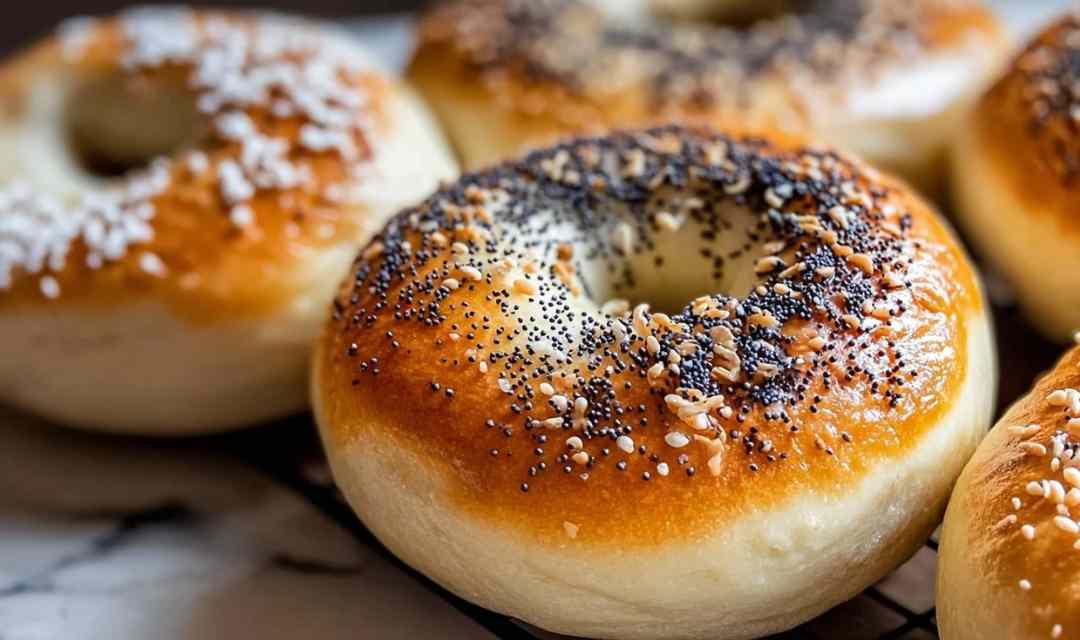
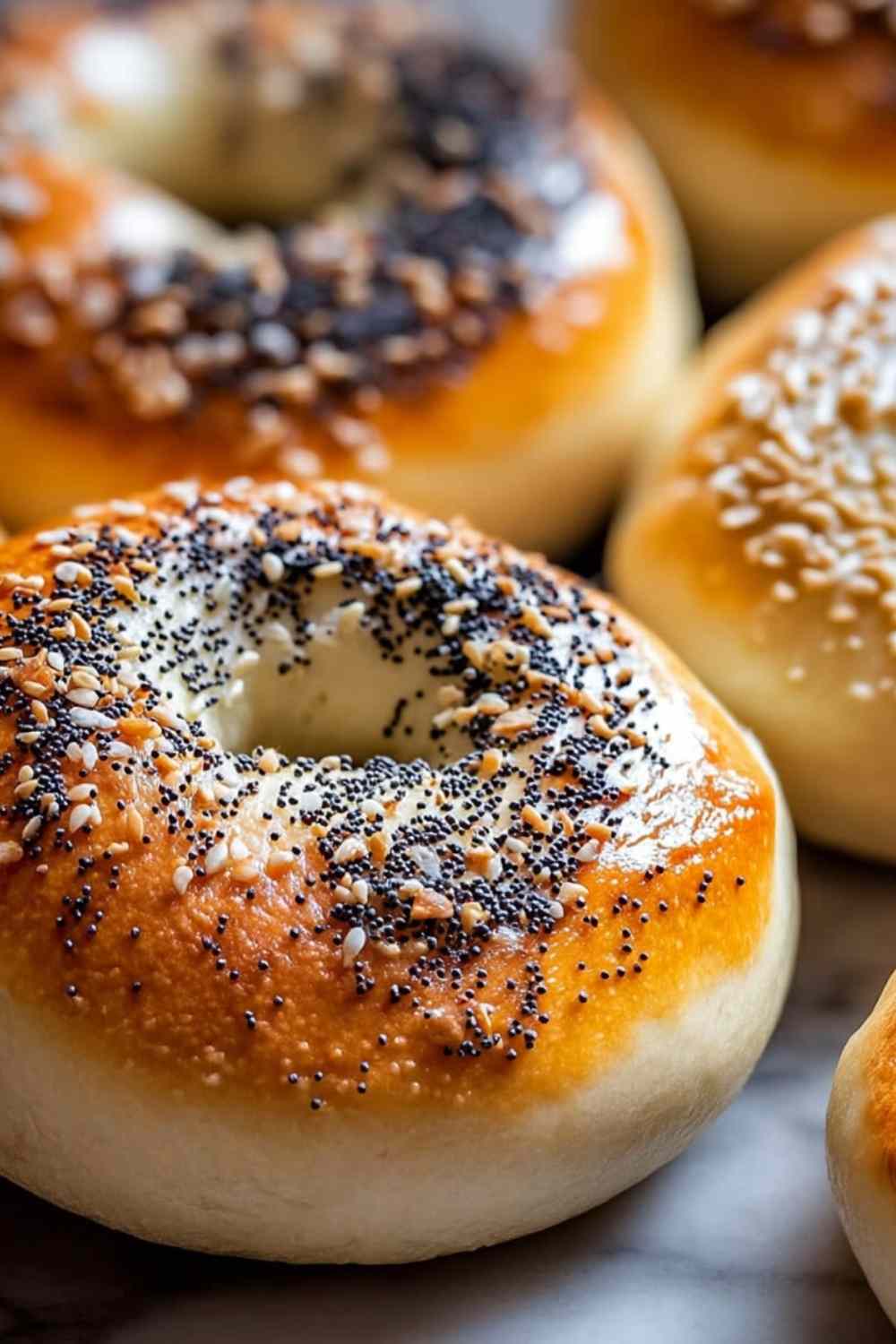
If you’ve been wondering what to do with your sourdough discard, these easy sourdough bagels are the answer. They’re chewy, flavorful, and surprisingly simple to make at home, even if you’re new to bagel-making. I love how this recipe turns something you’d normally toss into a bakery-quality breakfast treat.
I’ll never forget the first time I made bagels at home. I was skeptical that anything homemade could match the chewy, golden perfection of a bagel shop classic. But after boiling and baking my first batch of sourdough bagels, I was hooked. The kitchen smelled incredible, and that first bite delivered the perfect combination of a crispy crust and soft, tangy interior. Now I make these easy sourdough bagels whenever I have extra starter sitting in my fridge. They’re endlessly customizable with toppings, freeze beautifully, and taste even better than store-bought. Whether you use active starter or unfed discard, this beginner-friendly sourdough bagel recipe delivers every single time.
Table of Contents
What You’ll Need for Homemade Sourdough Bagels
I always use bread flour for these sourdough bagels because the higher protein content creates that signature chewy texture. You can use all-purpose flour in a pinch, but the results won’t be quite as authentic. Pro tip: if your sourdough discard has been sitting in the fridge for a week or more, it’ll add even more tangy flavor to your bagels.
- 1 cup (227g) unfed sourdough discard or active starter
- 1/2 cup (113g) warm water (not hot, just comfortably warm)
- 3 cups (360g) bread flour, plus extra for dusting your work surface
- 2 tablespoons (25g) granulated sugar
- 1 1/2 teaspoons fine sea salt
- 1 tablespoon baking soda (for the boiling water bath)
- Your choice of toppings: everything bagel seasoning, sesame seeds, poppy seeds, or coarse salt
- Optional: 1 egg whisked with 1 tablespoon water for egg wash
My personal recommendation: I prefer using slightly older discard (5-7 days old) for a more pronounced sourdough flavor. Fresh starter works beautifully too, just with a milder taste.

How to Make Sourdough Bagels Step by Step
I recommend mixing the dough in the evening so it can rise overnight, then shaping and baking in the morning. This makes fresh bagels for breakfast totally doable on a weekend.
Step 1: In a large mixing bowl or stand mixer bowl, combine 1 cup sourdough starter, 1/2 cup warm water, 3 cups bread flour, 2 tablespoons sugar, and 1 1/2 teaspoons salt. Mix with a wooden spoon or on low speed until you see a shaggy, rough-looking dough form, about 1-2 minutes.
Step 2: Knead the dough by hand on a lightly floured surface for 5-7 minutes, or use a stand mixer with the dough hook on medium-low speed. The dough should transform from shaggy to smooth and elastic. It should feel slightly tacky when you touch it but shouldn’t stick to your hands. If it’s too wet and sticky, add flour one tablespoon at a time.
Step 3: Place your dough in a lightly greased bowl, cover it with a damp towel or plastic wrap, and let it rise at room temperature for 6-8 hours until roughly doubled. In a cooler kitchen (below 70°F), this might take closer to 8-10 hours. The dough should look puffy and feel soft when gently pressed.
Step 4: Gently press down the risen dough to deflate it, then turn it out onto a lightly floured counter. Divide the dough into 8 equal pieces using a bench scraper or knife. Weigh them if you want perfectly uniform bagels (each piece should be about 100-105g).
Step 5: Shape each piece into a smooth ball by tucking the edges underneath and rolling against the counter. To form the bagel hole, poke your thumb straight through the center of each ball, then gently stretch and rotate the dough to create a hole about 1.5-2 inches wide (roughly the size of a walnut). Don’t make it too big. The hole will shrink during boiling and baking. Place shaped sourdough bagels on a parchment-lined baking sheet.
Step 6: Cover the bagels loosely with a towel and let them rest for 30-60 minutes. They should look slightly puffy but not doubled. Gently press a bagel with your finger – if the indent slowly springs back, they’re ready to boil.
Step 7: Preheat your oven to 425°F (220°C). Bring a large pot with at least 3 quarts of water to a rolling boil over high heat. Once boiling, carefully add 1 tablespoon baking soda. It will foam up vigorously, so stand back.
Step 8: Working in batches of 2-3 bagels, gently lower them into the boiling water using a slotted spoon. Boil for 1-2 minutes per side. The bagels will puff up and float to the surface. Use your slotted spoon to flip them halfway through. Remove each bagel and place it back on the parchment-lined baking sheet. Pro tip: Don’t skip the boiling step. This is what creates the shiny, chewy crust that makes a bagel a bagel.
Step 9: If using toppings, brush each boiled bagel with egg wash (1 whisked egg plus 1 tablespoon water), then sprinkle generously with your chosen topping while the surface is still wet. The egg wash helps toppings stick and creates a beautiful golden shine.
Step 10: Bake for 20-25 minutes until the sourdough bagels turn deep golden brown on top and feel firm when gently squeezed. The bottoms should be golden as well. Transfer immediately to a wire cooling rack. Let them cool for at least 10 minutes before slicing. Cutting into hot bagels makes them gummy inside.
Common mistake to avoid: If your dough feels too sticky during kneading, resist adding too much flour at once. Add just one tablespoon at a time and knead it in fully before deciding if you need more.
What to Serve with Fresh Sourdough Bagels
These easy sourdough bagels are incredibly versatile and pair beautifully with both sweet and savory toppings.
Classic Cream Cheese and Lox: The tangy sourdough flavor complements rich cream cheese and salty smoked salmon perfectly. Add capers, red onion, and fresh dill for an authentic deli-style experience.
Butter and Homemade Jam: Simple but delicious. The slight tang from the sourdough starter balances sweet fruit preserves beautifully. Try strawberry, blueberry, or apricot jam.
Breakfast Sandwich: Split a toasted sourdough bagel and layer with scrambled eggs, cheese, and crispy bacon or sausage. The chewy texture holds up perfectly to hearty fillings without getting soggy.
Avocado and Everything Seasoning: Mash ripe avocado on a toasted everything bagel, add a squeeze of lemon, flaky salt, and red pepper flakes. The best sides for sourdough bagels often include fresh fruit or a simple green salad for a balanced breakfast.
Peanut Butter and Honey: A kid-friendly option that also makes a great pre-workout snack. The protein from the peanut butter plus the carbs from the bagel provide sustained energy.
More Sourdough Recipes to Try
These easy sourdough bagels are just one delicious way to put sourdough starter or discard to work in the kitchen. If you love the tangy flavor and chewy texture of sourdough baking, explore more creative ways to use that precious starter sitting in the fridge.
For a sweet morning treat, try the decadent Easy Chocolate Chip Bagels that combines chocolate with that signature sourdough tang. The Sourdough Cinnamon Roll Focaccia transforms starter into an impressive breakfast centerpiece with swirls of cinnamon sugar. For a festive baking project, the beautifully spiced Gingerbread Banana Bread and aromatic Spiced Gingerbread Loaf with Vanilla Glaze both benefit from the depth sourdough adds to quick breads.

How to Store Your Homemade Bagels
Store completely cooled sourdough bagels in an airtight container or resealable plastic bag at room temperature for up to 2 days. They’ll stay freshest if you keep them whole rather than pre-sliced. For longer storage, I recommend slicing the bagels first, then freezing them in a freezer-safe bag for up to 3 months. This way you can grab just one or two whenever you need them.
To reheat, toast frozen bagel halves directly from the freezer. No need to thaw first. They’ll taste freshly baked and develop a crispy exterior with a soft, warm center. If you prefer a softer texture, wrap a whole bagel in a damp paper towel and microwave for 20-30 seconds.
Pro tip: I always make a double batch of these easy sourdough bagels and freeze half. Having homemade bagels ready to toast on busy mornings is a total game-changer. They’re so much better than anything you’ll find at the grocery store.
Common Questions About Sourdough Bagels
Can I use active sourdough starter instead of discard?
Yes, absolutely. Active starter and discard both work perfectly in this sourdough bagel recipe. Active starter might give you a slightly faster rise, but the final texture and flavor will be nearly identical.
Why are my bagels dense instead of chewy?
Dense bagels usually mean the dough didn’t rise long enough or was over-kneaded. Make sure your dough roughly doubles during the first rise, and knead just until smooth and elastic, not beyond. Also, don’t skip the boiling step, as it’s essential for proper texture.
Can I make the dough ahead of time?
Definitely. After kneading, let the dough rise in the refrigerator for 12-24 hours instead of at room temperature. This slow fermentation actually develops better flavor. Just bring it to room temperature for about an hour before shaping your sourdough bagels.
What if I don’t have bread flour?
You can substitute all-purpose flour, but your bagels will be slightly less chewy. For the closest texture, add 1-2 tablespoons of vital wheat gluten to all-purpose flour if you have it available.
Ready to Bake the Best Sourdough Bagels?
Making easy sourdough bagels at home is so much more rewarding than you might think. Yes, there are a few steps involved, but none of them are complicated, and the hands-on time is actually quite minimal. The result is a batch of beautifully chewy, golden bagels with that signature sourdough tang that you simply can’t buy in stores. Whether you’re using up discard or putting your active starter to work, this recipe delivers consistent, delicious results every single time. Try this recipe this weekend and transform your breakfast routine. You’ll never look at store-bought bagels the same way again!
Easy Sourdough Bagels: The Best Way to Use Your Starter or Discard

Incredibly chewy and flavorful sourdough bagels perfect for using up discard or active starter. Beginner-friendly recipe with no special equipment required.
- Prep Time: 30 minutes
- Cook Time: 25 minutes
- Total Time: 8 hours 55 minutes
- Yield: 8 bagels 1x
- Category: Breakfast
- Method: Boil, Bake
- Cuisine: American
- Diet: Vegetarian
Ingredients
- 1 cup (227g) unfed sourdough discard or active starter
- 1/2 cup (113g) warm water
- 3 cups (360g) bread flour, plus more for dusting
- 2 tablespoons (25g) granulated sugar
- 1 1/2 teaspoons fine sea salt
- 1 tablespoon baking soda (for the water bath)
- Your choice of toppings (everything bagel seasoning, sesame seeds, poppy seeds, coarse salt)
- Optional: 1 egg whisked with 1 tablespoon water for egg wash
Instructions
- In a large bowl or stand mixer bowl, combine sourdough starter, warm water, bread flour, sugar, and salt. Mix on low speed or with a wooden spoon until a shaggy dough forms.
- Knead for 5-7 minutes by hand or with a dough hook on medium-low speed until the dough is smooth and elastic. It should be slightly tacky but not overly sticky. Add flour one tablespoon at a time if too wet.
- Place dough in a lightly greased bowl, cover, and let it rise at room temperature for 6-8 hours, or until roughly doubled in size. In cooler kitchens (below 70°F), this may take 8-10 hours.
- Gently deflate the dough and turn out onto a lightly floured surface. Divide into 8 equal pieces (approximately 100-105g each).
- Shape each piece into a smooth ball. Poke your thumb through the center of each ball and gently stretch the opening to about 1.5-2 inches in diameter (roughly the size of a walnut). Place shaped bagels on a parchment-lined baking sheet.
- Cover bagels loosely and let rest for 30-60 minutes, until slightly puffy. Gently press with your finger – if the indent slowly springs back, they’re ready.
- Preheat oven to 425°F (220°C). Bring a large pot with at least 3 quarts of water to a rolling boil and add the baking soda (it will foam up).
- Working in batches, boil bagels for 1-2 minutes per side. Use a slotted spoon to remove them and place back on the parchment-lined baking sheet.
- If using toppings, brush bagels with egg wash and sprinkle generously with desired toppings.
- Bake for 20-25 minutes, or until deep golden brown.
- Transfer baked bagels to a wire rack to cool for at least 10 minutes before slicing.
Notes
- The dough should be firm enough to hold its shape. If too sticky, add flour one tablespoon at a time during kneading.
- Do not skip the boiling step – this creates the signature chewy crust of a bagel.
- For deeper flavor, let dough rise in the refrigerator overnight (12-24 hours), then bring to room temperature for an hour before shaping.
- Use a kitchen scale for most accurate and consistent results.
- Older discard (5-7 days) adds more pronounced sourdough flavor than fresh starter.
Nutrition
- Serving Size: 1 bagel
- Calories: 220 kcal
- Sugar: 3 g
- Sodium: 580 mg
- Fat: 1 g
- Saturated Fat: 0 g
- Unsaturated Fat: 1 g
- Trans Fat: 0 g
- Carbohydrates: 45 g
- Fiber: 2 g
- Protein: 8 g
- Cholesterol: 0 mg