

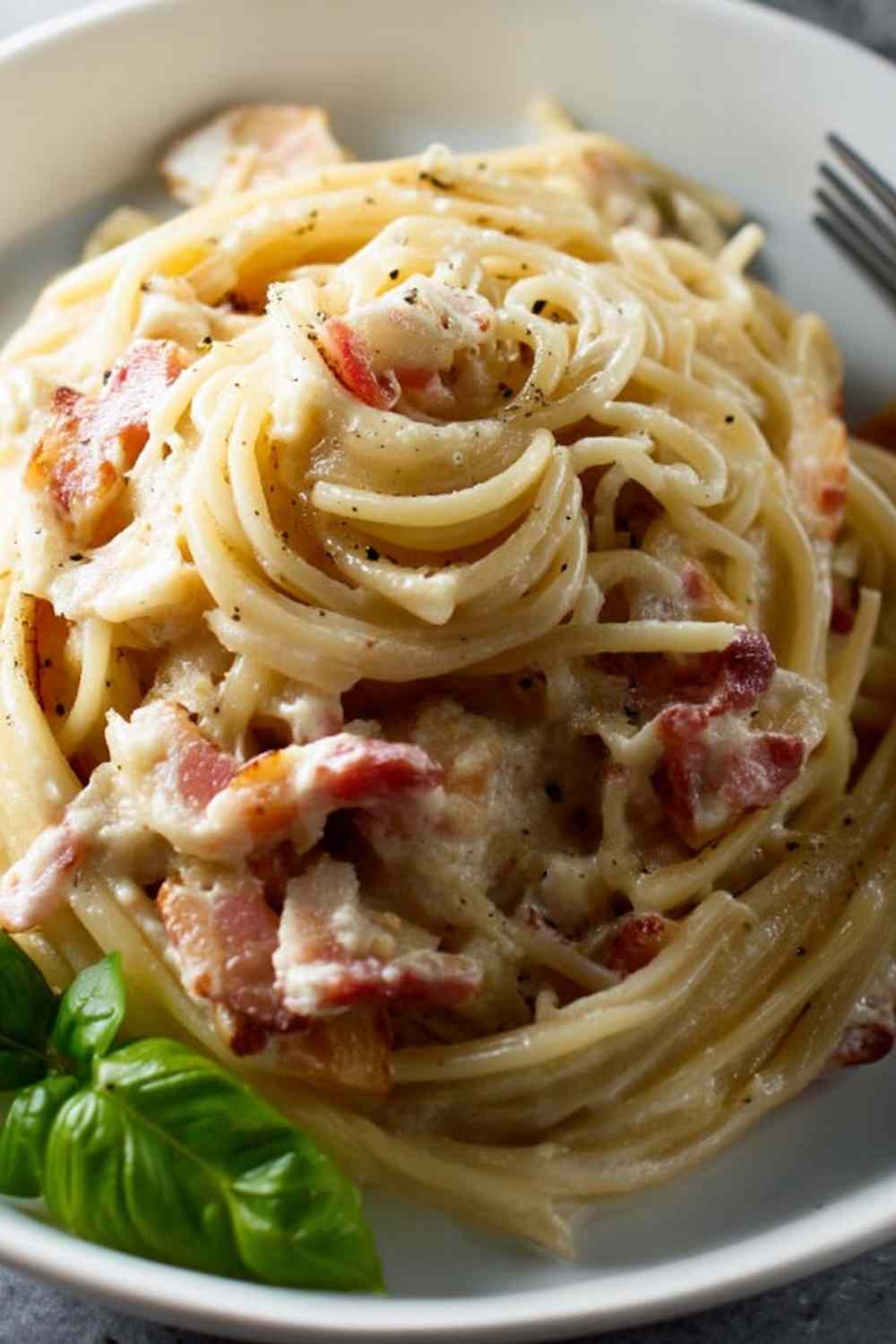
Michael Symon carbonara is one of those recipes that changed the way I think about pasta. It’s authentic, rich, and silky smooth without a drop of cream. When I first tried making carbonara the traditional way, I was shocked at how something so simple could taste so luxurious.
I remember the first time I nailed this recipe. The kitchen smelled incredible from the crispy guanciale, and when I tossed that hot pasta with the egg mixture, it transformed into the creamiest sauce I’d ever made. This Michael Symon carbonara recipe uses just a handful of quality ingredients like guanciale, Pecorino Romano, and farm-fresh eggs to create a dish that tastes like you spent hours in the kitchen. It’s perfect for a quick weeknight dinner or when you want to impress guests without the stress.
Table of Contents
What You’ll Need for This Carbonara
I always recommend using the best quality ingredients you can find for this dish, especially the cheese and guanciale. The beauty of Michael Symon carbonara is in its simplicity, so each ingredient really shines through.
- 1 lb spaghetti or bucatini
- 8 oz guanciale, diced (or pancetta if guanciale isn’t available)
- 4 large egg yolks
- 1 large whole egg
- 1 cup finely grated Pecorino Romano cheese, plus more for serving
- 1 cup finely grated Parmesan cheese
- 1 teaspoon freshly ground black pepper, plus more for serving
- Coarse salt for pasta water
Pro tip: I always grate my own cheese from a block rather than buying pre-shredded. Those anti-caking agents in pre-shredded cheese can make your sauce grainy instead of silky smooth. Letting the cheese come to room temperature before mixing helps it incorporate even better into the sauce.
How to Make Michael Symon Carbonara
I prefer starting the guanciale in a cold pan, which helps render the fat slowly and makes it extra crispy. This method gives you the best texture and flavor for authentic carbonara.
Step 1: Bring a large pot of heavily salted water to a boil. The water should taste like the sea. Add the spaghetti and cook according to package directions until al dente.
Step 2: While the pasta is cooking, place the diced guanciale in a large cold skillet. Turn the heat to medium-low and cook, stirring occasionally, until the fat has rendered out and the guanciale pieces are golden and crispy, about 10-15 minutes depending on how thick you diced it. You’ll see the fat pooling in the pan and the meat turning a beautiful amber color. Turn off the heat and let the skillet cool slightly while the pasta finishes.
Step 3: In a large bowl, whisk together the egg yolks, whole egg, Pecorino Romano, Parmesan, and black pepper until the mixture is smooth and well combined. It should look pale yellow and creamy.
Step 4: Just before the pasta is done cooking, scoop out and reserve at least 1½ cups of the starchy pasta water. You’ll use about half to a full cup total, but having extra ensures you can adjust the sauce perfectly.
Step 5: Drain the pasta and add it directly to the skillet with the crispy guanciale and its rendered fat. Toss everything together to coat the pasta in that flavorful fat.
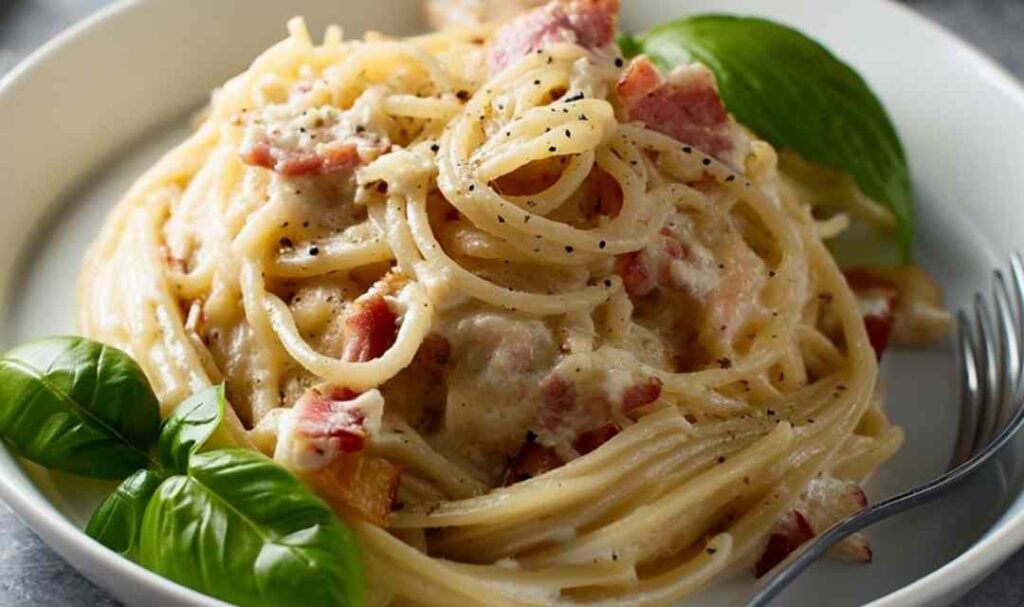
Step 6: Here’s the crucial step for perfect Michael Symon carbonara. Make sure the skillet is completely off the heat and has cooled for about 30 seconds. Pour the egg and cheese mixture over the hot pasta, stirring vigorously and constantly with tongs. The residual heat will cook the eggs gently without scrambling them.
Step 7: Add ½ cup of the reserved pasta water and continue tossing until the sauce becomes creamy and clings beautifully to each strand of pasta. If the sauce feels too thick, add more pasta water one tablespoon at a time. The sauce should be glossy and coat the pasta like silk.
Step 8: Serve immediately in warm bowls, topped with extra Pecorino Romano cheese and a generous grind of black pepper.
Warning: Don’t let the pan stay too hot when adding the eggs, or you’ll end up with scrambled eggs instead of a creamy sauce. Letting it cool for 30 seconds after the pasta goes in makes all the difference.
Best Ways to Serve This Pasta
This Michael Symon carbonara is rich and satisfying on its own, but pairing it with the right sides creates a complete Italian feast.
Simple Arugula Salad: The peppery bite of fresh arugula dressed with lemon and olive oil cuts through the richness of the carbonara perfectly. It’s light, refreshing, and adds a nice color contrast to your plate.
Garlic Bread: Crusty, buttery garlic bread is perfect for soaking up any extra sauce left in your bowl. The crispy texture complements the creamy pasta beautifully.
Roasted Asparagus: When asparagus is in season, I love serving it alongside carbonara. The slight bitterness and crisp-tender texture balance the rich, salty pasta wonderfully.
Caesar Salad: A classic Caesar with crisp romaine and tangy dressing pairs naturally with carbonara since they share similar Italian flavors and that love of good Parmesan cheese.
More Comforting Pasta Dishes to Try
This Michael Symon carbonara brings restaurant-quality Italian comfort to your table with minimal effort. When you’re craving more satisfying pasta dishes, there are several delicious options that deliver similar cozy vibes. The Creamy Paprika Steak Shells offers tender steak in a rich, flavorful sauce that pasta lovers will adore, while Loaded Beef Bacon Cheeseburger Pasta transforms classic burger flavors into a hearty one-pot meal.
For lighter options that still satisfy, consider the Best Rotisserie Chicken Broccoli Pasta with its creamy garlic sauce, or try Garlic Butter Bowtie Pasta with Beef for another quick weeknight dinner winner. The Best Sticky Garlic Chicken Noodles delivers amazing Asian-inspired flavors in the same amount of time it takes to make carbonara.

Storing and Reheating Tips
Honestly, carbonara is one of those dishes that’s truly best enjoyed fresh. The sauce can separate and become clumpy when refrigerated because the eggs and cheese don’t respond well to cooling and reheating.
If you do have leftovers, store them in an airtight container in the refrigerator for up to 1 day. To reheat, add a splash of milk or pasta water to a skillet over very low heat and gently warm the pasta, stirring constantly. It won’t be quite the same as fresh, but it’s still tasty.
Pro tip: I recommend only making as much Michael Symon carbonara as you’ll eat in one sitting. The recipe is so quick that it’s easy to whip up fresh whenever the craving hits.
Common Questions About Carbonara
Can I use bacon instead of guanciale?
While guanciale or pancetta are traditional, bacon can work in a pinch. Just know that bacon is smoked, which will give your carbonara a noticeably different flavor profile than the authentic Roman version. Pancetta is a closer substitute since it’s also unsmoked pork.
Why did my sauce turn out scrambled?
This happens when the pan is too hot when you add the eggs. Always remove the skillet from the heat completely and let it cool for about 30 seconds before adding the egg mixture. Toss quickly to distribute the heat evenly without scrambling.
Can I freeze carbonara?
I don’t recommend freezing this dish. The egg-based sauce doesn’t freeze and reheat well. It’s better to make fresh batches as needed since the recipe comes together so quickly.
Time to Make This Classic
Michael Symon carbonara proves that you don’t need complicated techniques or fancy ingredients to create restaurant-quality pasta at home. With just a little attention to temperature and timing, you’ll have a creamy, luxurious dish that feels special every single time. The combination of crispy guanciale, silky sauce, and perfectly cooked pasta is truly unbeatable. Try this recipe and taste why carbonara has remained a beloved Italian classic for generations!
Michael Symon Carbonara
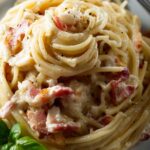
Rich, creamy carbonara made the authentic way with guanciale, Pecorino Romano, and eggs. No cream needed for this restaurant-quality pasta dish.
- Prep Time: 10 minutes
- Cook Time: 15 minutes
- Total Time: 25 minutes
- Yield: 4 servings 1x
- Category: Main Course
- Method: Boil, Saute
- Cuisine: Italian
Ingredients
- 1 lb spaghetti or bucatini
- 8 oz guanciale, diced (or pancetta)
- 4 large egg yolks
- 1 large whole egg
- 1 cup finely grated Pecorino Romano cheese, plus more for serving
- 1 cup finely grated Parmesan cheese
- 1 teaspoon freshly ground black pepper, plus more for serving
- Coarse salt for pasta water
Instructions
- Bring a large pot of heavily salted water to a boil. Add the spaghetti and cook according to package directions until al dente.
- While the pasta is cooking, place the diced guanciale in a large cold skillet. Cook over medium-low heat, stirring occasionally, until the fat has rendered and the guanciale is crispy, about 10-15 minutes. Turn off the heat and let cool slightly.
- In a large bowl, whisk together the egg yolks, whole egg, Pecorino Romano, Parmesan, and black pepper until smooth and well combined.
- Just before the pasta is done, scoop out and reserve at least 1½ cups of the starchy pasta water.
- Drain the pasta and add it directly to the skillet with the crispy guanciale and its rendered fat. Toss to coat.
- Make sure the skillet is completely off the heat. Pour the egg and cheese mixture over the hot pasta, stirring vigorously with tongs to create a creamy sauce without scrambling the eggs.
- Add ½ cup of the reserved pasta water and continue tossing until the sauce becomes creamy and clings to the pasta. Add more pasta water, a tablespoon at a time, if the sauce is too thick.
- Serve immediately in warm bowls, topped with extra Pecorino Romano cheese and a generous grind of black pepper.
Notes
- Guanciale is traditional for carbonara, but high-quality pancetta works as a substitute. Bacon will add a smoky flavor that’s not authentic but still delicious.
- The key to a creamy sauce is removing the pan from heat and letting it cool for 30 seconds before adding the eggs. This prevents scrambling.
- Always grate cheese fresh from a block. Pre-shredded cheese contains anti-caking agents that prevent smooth melting.
- Carbonara must be served immediately. It does not wait or reheat well.
Nutrition
- Serving Size: 1 serving (about 1.5 cups)
- Calories: 685 kcal
- Sugar: 3 g
- Sodium: 890 mg
- Fat: 32 g
- Saturated Fat: 14 g
- Unsaturated Fat: 16 g
- Trans Fat: 0 g
- Carbohydrates: 62 g
- Fiber: 3 g
- Protein: 35 g
- Cholesterol: 285 mg