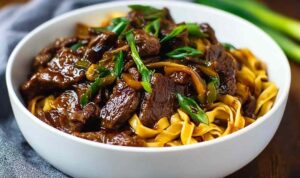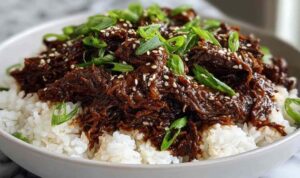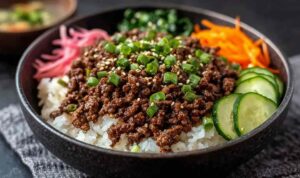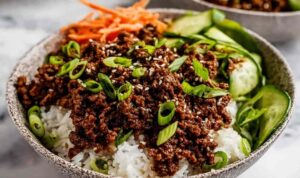

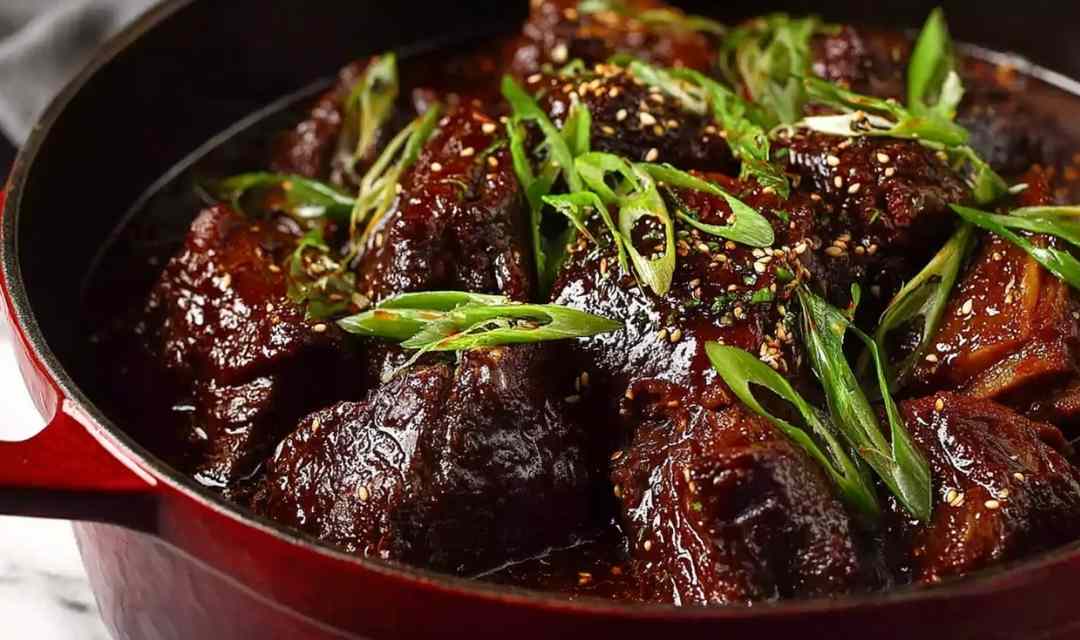
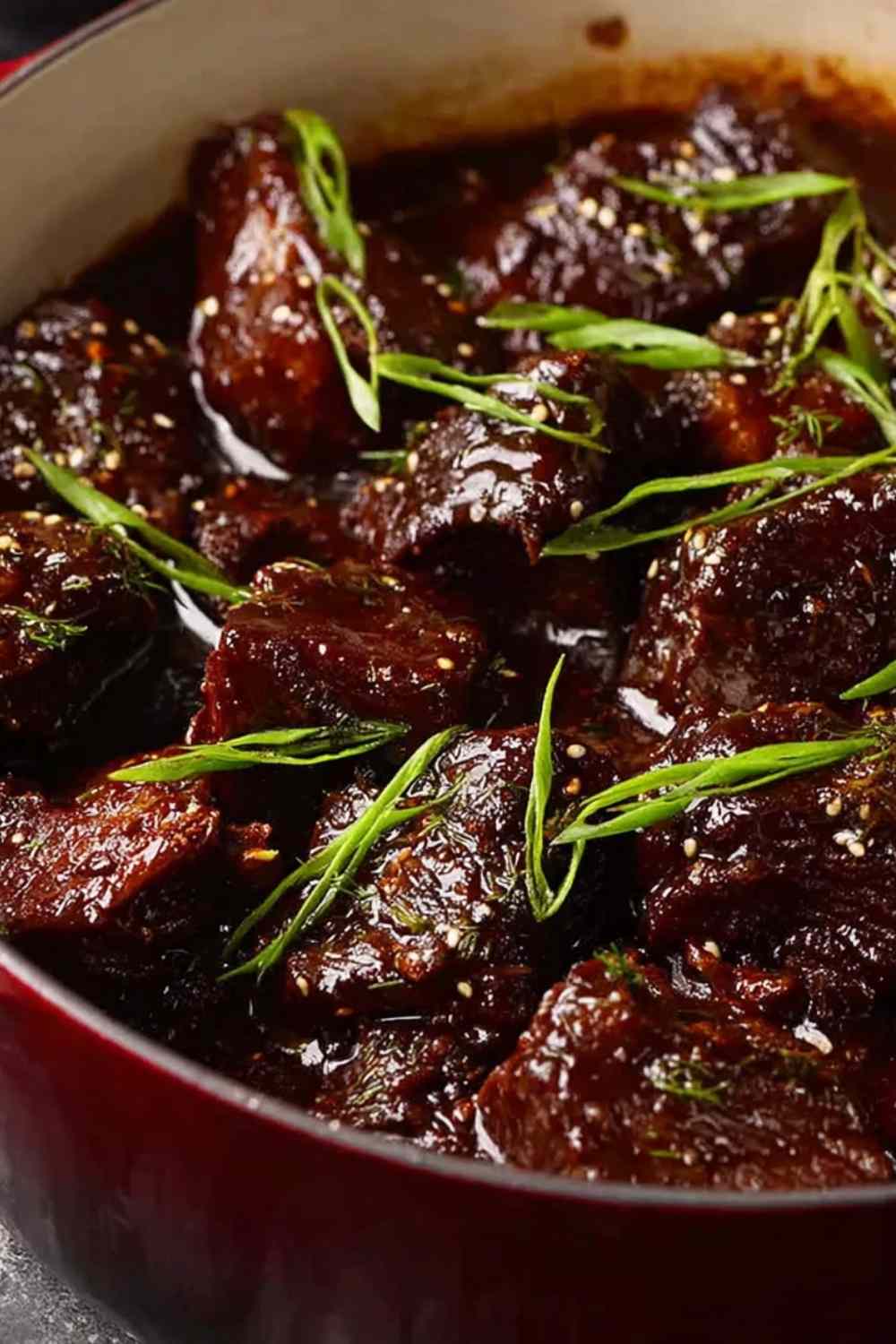
This Korean pot roast transforms ordinary beef chuck into an extraordinary meal, combining deep umami flavors with a hint of sweetness and just enough heat to keep things interesting. I love how this recipe brings together two comfort food traditions – classic American pot roast and bold Korean flavors – into one unforgettable dish.
The first time I made this fusion dish, I was blown away by how the gochujang and soy sauce created such a rich, complex sauce that perfectly complemented the tender beef. The aroma that fills your kitchen as it slow-cooks is something special. What makes this Korean pot roast recipe work so well is how the grated Asian pear naturally tenderizes the meat while adding subtle sweetness to balance the savory notes. It’s become my go-to when I want to impress dinner guests without spending all day in the kitchen, and the leftovers taste even better the next day.
Table of Contents
What You’ll Need for This Korean Pot Roast
Before you start, let me share that using a good quality chuck roast makes all the difference here. I always choose a well-marbled piece with visible fat running through it – that’s what keeps the meat juicy during the long cooking time. If your local Asian market (or Whole Foods) has Korean pears, grab one. They’re slightly different from regular pears and add an authentic touch.
- 1 (3-4 pound) boneless beef chuck roast
- Salt and freshly ground black pepper
- 2 tablespoons olive oil
- 1 large onion, chopped
- 4 cloves garlic, minced
- 1 tablespoon fresh ginger, grated (I prefer using a microplane for the finest texture)
- 1/2 cup soy sauce (use low-sodium if you’re watching salt intake)
- 1/4 cup brown sugar
- 1/4 cup gochujang (Korean chili paste – look for Mother-in-Law’s or Chung Jung One brands in the Asian section)
- 1 tablespoon sesame oil
- 1 Asian pear, peeled and grated with its juice (or substitute 1/2 Fuji or Gala apple)
- 4 green onions, chopped (white and green parts)
- 1 tablespoon toasted sesame seeds
- 1/2 to 1 cup beef broth (if needed for liquid)
Equipment: 5-7 quart Dutch oven or heavy-bottomed pot with tight-fitting lid
My personal recommendation: Don’t skimp on the sesame oil. That nutty aroma it brings to the Korean pot roast is irreplaceable.
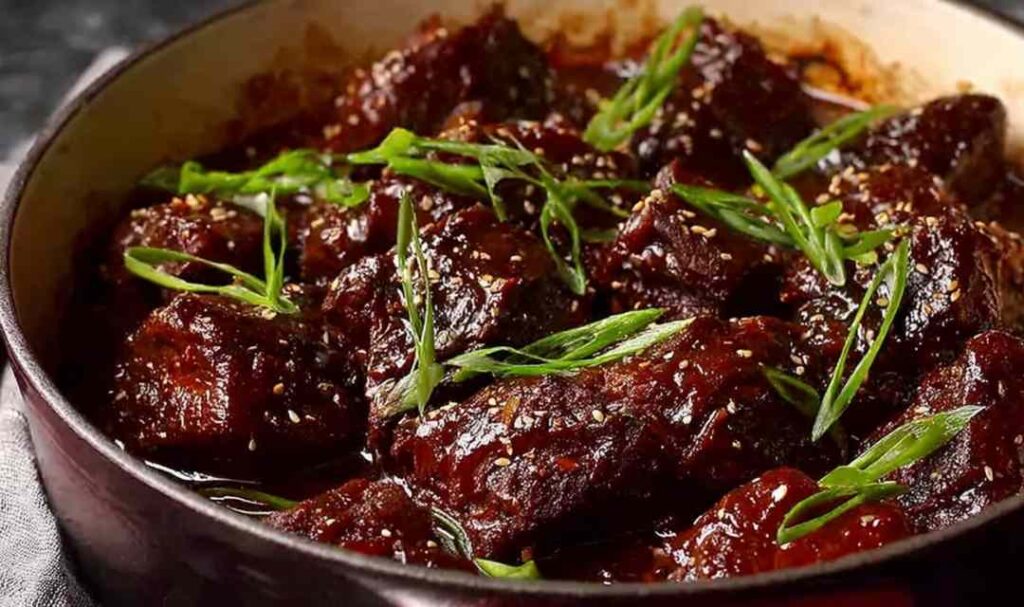
How to Make This Showstopping Korean Pot Roast
I recommend taking your time with the searing step – it really does build the foundation of flavor for the entire dish. Make sure your pot is nice and hot before the meat hits it.
Step 1: Season the chuck roast generously with salt and pepper on all sides. Don’t be shy here – the meat needs good seasoning to shine.
Step 2: Heat the olive oil in a large Dutch oven over medium-high heat. Once shimmering, sear the roast for 3-4 minutes per side until a deep golden-brown crust forms. You should hear that satisfying sizzle. Remove the roast and set aside. Don’t move the meat around while searing – let it sit undisturbed to develop that beautiful crust.
Step 3: In the same pot (keeping all those flavorful brown bits), add the chopped onion and cook until softened and translucent, about 5 minutes. Stir occasionally to prevent sticking.
Step 4: Add the minced garlic and grated ginger, cooking for another minute until fragrant. Your kitchen should smell amazing right now.
Step 5: In a medium bowl, whisk together the soy sauce, brown sugar, gochujang, sesame oil, and grated pear with its juice until well combined. The pear will create a slightly thick, glossy sauce.
Step 6: Return the seared roast to the pot. Pour the sauce over the roast, using a spoon to ensure it’s well-coated on all sides. If the sauce doesn’t come at least halfway up the roast, add 1/2 to 1 cup of beef broth.
Step 7: Bring the liquid to a simmer, then reduce the heat to low (around 200-250°F if you can monitor it). Cover the pot with a tight-fitting lid and let it cook for 3 hours 30 minutes to 4 hours, or until the meat is fork-tender and pulls apart easily. I usually check mine around the 3-hour mark.
Step 8: Once the Korean pot roast is cooked, carefully remove it from the pot and let it rest for 10-15 minutes, covered loosely with foil. This allows the juices to redistribute.
Step 9: While the roast rests, skim any excess fat from the surface of the sauce in the pot using a spoon. You can also thicken the sauce by simmering it uncovered on the stove for 5-10 minutes until it coats the back of a spoon.
Step 10: Serve the shredded or sliced pot roast with the sauce spooned generously over top, garnished with chopped green onions and toasted sesame seeds for that authentic finish.
Perfect Pairings for Korean Pot Roast
The bold, savory-sweet flavors of this Korean pot roast pair beautifully with simple, clean-tasting sides.
Steamed White Rice: Soaks up all that incredible sauce and provides a neutral base that lets the beef shine. This is the traditional choice and my personal favorite.
Kimchi: Adds a tangy, spicy, fermented crunch that cuts through the richness of the meat. The probiotics are a bonus too.
Roasted Broccoli or Carrots: Their slight char and natural sweetness complement the gochujang beautifully while adding colorful nutrients to your plate.
Cauliflower Rice: A lighter, low-carb alternative that still captures all that delicious sauce without weighing you down.
Fresh Asian Slaw: Crisp cabbage and carrots with a light sesame dressing add refreshing crunch and balance to the tender, rich pot roast.
Looking for the best sides for Korean pot roast? Any combination of these will create a well-rounded, satisfying meal.
More Hearty Comfort Meals You’ll Love
This Korean pot roast is perfect when you want something different from traditional pot roast but still crave that same cozy comfort. If you enjoy fusion flavors and slow-cooked beef, try the tender Crock Pot French Onion Pot Roast which brings together classic French onion soup flavors with melt-in-your-mouth beef. For another Asian-inspired option, the Slow Cooker Teriyaki Meatballs offer similar sweet and savory notes in a more casual, party-friendly format.
When the weather turns cold, nothing beats a hearty one-pot meal. The Slow Cooker Garlic Butter Beef Bites and Potatoes delivers fork-tender beef with minimal effort, while the rich Slow Cooker Beef Brisket is another showstopper that works beautifully for special occasions. For something with a bit of spice, the Crockpot Tex-Mex Chicken brings bold flavors to the table with the same hands-off cooking approach.

Storing Your Korean Pot Roast Leftovers
This Korean pot roast stores exceptionally well, making it perfect for meal prep. Let the meat cool completely before transferring it to an airtight glass or BPA-free plastic container with plenty of sauce. It will keep in the refrigerator for up to 4 days.
For reheating, gently warm the pot roast in a covered pot over low heat with a splash of water or broth to keep it moist. You can also microwave individual portions, covered, stirring halfway through. The flavors actually deepen overnight, so day-two Korean pot roast often tastes even better.
To freeze, portion the cooled meat and sauce into freezer-safe containers or bags, removing as much air as possible. It will keep frozen for up to 3 months. Thaw overnight in the refrigerator before reheating. This makes it incredibly convenient for busy weeknights when you want a home-cooked meal without the effort.
Your Korean Pot Roast Questions Answered
Can I make this Korean pot roast in a slow cooker?
Yes! After searing the meat and sautéing the aromatics on the stovetop, transfer everything to your slow cooker. Cook on low for 7-8 hours or on high for 4-5 hours until fork-tender. Slow cookers cook at lower temperatures, so they require more time than stovetop methods.
What if I can’t find gochujang?
While gochujang gives this Korean pot roast its authentic flavor, you can substitute with a mixture of 2 tablespoons tomato paste, 1 tablespoon sriracha, and 1 teaspoon miso paste. The flavor won’t be identical but will still be delicious.
My sauce seems thin. How do I thicken it?
After removing the cooked roast, simmer the sauce uncovered for 10-15 minutes until reduced. Alternatively, whisk together 1 tablespoon cornstarch with 2 tablespoons cold water and stir into the simmering sauce until thickened.
How do I know when the pot roast is done?
The meat is ready when you can easily pull it apart with two forks. It should be so tender it almost falls apart when you touch it. If it still feels firm or requires sawing with a knife, it needs more time.
Ready to Make This Amazing Korean Pot Roast?
This Korean pot roast recipe proves that fusion cooking can be both simple and spectacular. The tender, flavorful beef paired with that rich, complex sauce will have everyone asking for seconds. Whether you’re cooking for a special family dinner or just want to elevate your weeknight meals, this dish delivers restaurant-quality results with minimal hands-on time. Try this recipe and discover your new favorite way to make pot roast!
Korean Pot Roast: Bold, Tender, and Incredibly Flavorful
This Korean pot roast blends rich, hearty comfort with bold, sweet, and savory Korean flavors. Perfect for family dinners or special occasions.
- Prep Time: 20 minutes
- Cook Time: 3 hours 30 minutes
- Total Time: 4 hours
- Yield: 6–8 servings 1x
- Category: Main Course
- Method: Braising
- Cuisine: Korean Fusion
Ingredients
- 1 (3-4 pound) boneless beef chuck roast
- Salt and freshly ground black pepper
- 2 tablespoons olive oil
- 1 large onion, chopped
- 4 cloves garlic, minced
- 1 tablespoon fresh ginger, grated
- 1/2 cup soy sauce
- 1/4 cup brown sugar
- 1/4 cup gochujang (Korean chili paste)
- 1 tablespoon sesame oil
- 1 Asian pear, peeled and grated with juice (or 1/2 apple)
- 4 green onions, chopped
- 1 tablespoon toasted sesame seeds
- 1/2 to 1 cup beef broth (if needed)
Instructions
- Season the chuck roast generously with salt and pepper on all sides.
- Heat olive oil in a large Dutch oven over medium-high heat. Sear the roast for 3-4 minutes per side until a deep brown crust forms. Remove and set aside.
- In the same pot, add chopped onion and cook until softened, about 5 minutes. Add garlic and ginger and cook for another minute until fragrant.
- In a medium bowl, whisk together soy sauce, brown sugar, gochujang, sesame oil, and grated pear with its juice.
- Return seared roast to pot. Pour sauce over roast, ensuring it’s well-coated. If sauce doesn’t come halfway up roast, add 1/2 to 1 cup beef broth.
- Bring liquid to a simmer, then reduce heat to low. Cover with a tight-fitting lid and cook for 3 hours 30 minutes to 4 hours, or until meat is fork-tender.
- Remove roast from pot and let rest for 10-15 minutes, covered loosely with foil.
- Skim excess fat from sauce. Thicken by simmering uncovered for 5-10 minutes if desired.
- Serve shredded or sliced pot roast with sauce, garnished with green onions and sesame seeds.
Notes
- Searing the meat develops deep, rich flavor. Don’t skip this step.
- Cooking time varies by roast size. Meat is done when it falls apart easily with a fork.
- For spicier flavor, add more gochujang or red pepper flakes.
- Substitute Fuji or Gala apple if Asian pear is unavailable.
- Slow cooker method: After searing and sautéing, transfer to slow cooker. Cook on low 7-8 hours or high 4-5 hours. Slow cookers require longer cooking due to lower temperatures.
- Look for Mother-in-Law’s or Chung Jung One brand gochujang for best results.
Nutrition
- Serving Size: 1/6 of recipe
- Calories: 580 kcal
- Sugar: 12 g
- Sodium: 890 mg
- Fat: 32 g
- Saturated Fat: 11 g
- Unsaturated Fat: 19 g
- Trans Fat: 0 g
- Carbohydrates: 20 g
- Fiber: 1 g
- Protein: 41 g
- Cholesterol: 145 mg