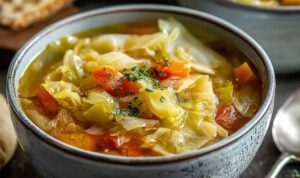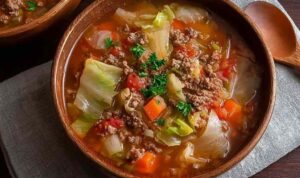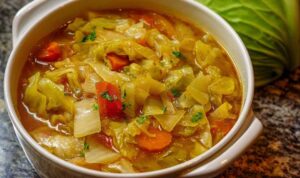

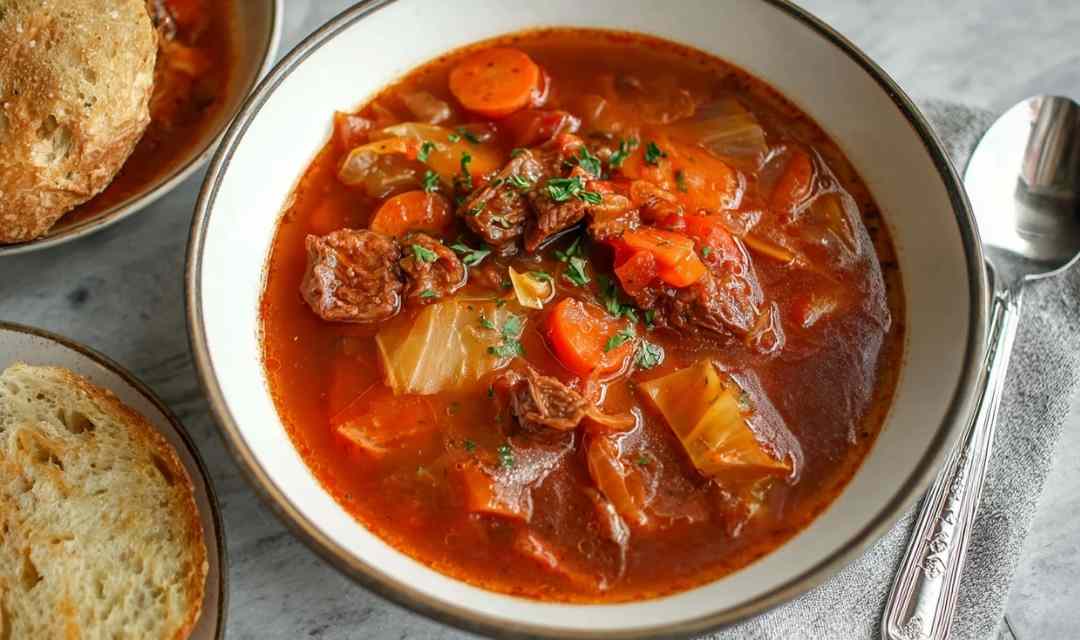
Beef Cabbage Soup is a soul-warming, protein-packed meal that brings together tender chunks of beef and a rainbow of fresh vegetables in a rich, savory broth. I’ve been making this recipe for years, especially during cooler months when my family craves something filling and nourishing that doesn’t leave us hungry an hour later.
This beef cabbage soup has become my go-to when I need a nutritious dinner with hands-off simmering time. There’s something wonderfully comforting about browning beef until it’s perfectly seared, then letting it simmer until it practically falls apart. The cabbage adds a subtle sweetness and plenty of fiber, while carrots, celery, and leeks round out the flavor profile beautifully. I love that this soup freezes wonderfully, making it ideal for busy weeknights. Plus, with loads of vegetables and high-quality protein, it’s one of those recipes that tastes indulgent but actually fuels your body properly. Whether you’re meal prepping for the week or feeding a hungry crowd, this beef vegetable soup with cabbage delivers comfort in every spoonful.
Table of Contents
What Goes Into This Nourishing Beef Cabbage Soup
I always start with quality beef for the best results. A well-marbled chuck roast makes all the difference in tenderness and flavor. Pro tip: don’t skimp on the searing step, as those caramelized bits create incredible depth in your finished soup.
- 2 Tablespoons olive oil (for searing the beef)
- 2.5 pounds roast beef with marbleized fat throughout, cut into 2-3 inch chunks
- Kosher salt and freshly ground black pepper to taste
- 3 Tablespoons tomato paste
- 5-6 cups mixture of water and lower-sodium beef broth (use half water, half packaged broth)
- 1 Tablespoon olive oil (for sautéing vegetables)
- 2 medium leeks, white and light green parts only, chopped (about 2 cups) – or substitute with 1 large yellow onion
- 2 stalks celery (1 cup), chopped
- 4 carrots (3 cups), chopped
- 4 cloves garlic, minced
- 1 medium cabbage (about 10 cups), chopped (I like green cabbage, but savoy works beautifully too)
- 15 oz. tomato sauce
- 7-8 cups lower-sodium beef broth (can use reserved broth from cooking beef)
- 1 teaspoon thyme
- 1 Tablespoon Worcestershire sauce
- 3 bay leaves
- Salt and pepper to taste
My ingredient tip: I’ve found that leeks add a more delicate onion flavor than regular onions, but both work perfectly. Also, one reader successfully used rinsed sauerkraut instead of fresh cabbage for a tangy twist.
How to Make the Best Beef Cabbage Soup
I recommend taking your time with the beef-cooking process. Rushing this step results in tough, chewy meat instead of melt-in-your-mouth tender chunks that make this beef cabbage soup so satisfying.
Step 1: Heat 2 tablespoons olive oil in a large stockpot over medium-high heat. Cut your roast into large 2-3 inch chunks and season liberally with kosher salt and freshly ground black pepper.
Step 2: Brown the beef chunks on all sides using tongs to turn them, working in batches if necessary. Don’t crowd the pan or the meat will steam instead of sear. This should take about 8-10 minutes total. You want a rich brown crust on each piece.
Step 3: Remove the seared beef to a plate. Add tomato paste to the hot pot and stir for about 30 seconds, then pour in your broth and water mixture. Use a wooden spoon to scrape up all those flavorful brown bits stuck to the bottom (this is called deglazing).
Step 4: Return the beef to the pot and bring to a gentle simmer. Reduce heat to medium-low and cover pot with lid slightly ajar to allow steam to escape. Cook for 1.5 to 2.5 hours, checking occasionally and skimming any foam or excess fat that rises to the surface. The beef is ready when it’s fork-tender and shreds easily. Remove meat to a plate, let it cool slightly, then shred with two forks. Reserve the cooking broth.
Step 5: In the same stockpot (no need to wash it), heat 1 tablespoon olive oil over medium-high heat. Add leeks, celery, carrots, thyme, salt, and pepper. Sauté until vegetables begin to soften, about 4-5 minutes. The vegetables should be fragrant and slightly golden at the edges.
Step 6: Add minced garlic during the last 30 seconds of sautéing (garlic burns easily, so add it at the end). Stir constantly until fragrant.
Step 7: Pour in tomato sauce and 7-8 cups beef broth. If using the reserved broth from cooking the beef, taste it first as it’s already seasoned – you may need less additional salt later. Stir well to combine.
Step 8: Add the chopped cabbage, Worcestershire sauce, and bay leaves. Season with salt and pepper to taste. The large amount of cabbage will seem overwhelming at first but reduces significantly as it wilts. Bring the mixture to a boil, then reduce heat and simmer until the cabbage is tender and wilted, about 15-20 minutes.
Step 9: Stir the shredded beef back into the soup and let it heat through for another 5 minutes. Taste and adjust seasonings as needed. The cabbage should be tender but not mushy. Remove bay leaves before serving.
Pro tip: If your beef cabbage soup looks too thick, add extra broth until you reach your desired consistency. The cabbage will release some liquid as it cooks, but preferences vary.
Perfect Pairings for Your Beef Cabbage Soup
This hearty soup pairs beautifully with sides that complement its rich, savory flavor.
Crusty French bread: The perfect vehicle for soaking up every last drop of that flavorful broth. I love serving thick slices with butter on the side.
Crushed saltines: A classic soup topper that adds a satisfying crunch and helps stretch the meal further.
Classic wedge salad: The cool, crisp iceberg lettuce and tangy blue cheese dressing provide a refreshing contrast to the warm, hearty beef cabbage soup.
Shaved cauliflower salad: This light, crunchy side adds freshness and extra vegetables without making you feel overly full.
Arugula caprese salad: The peppery arugula, fresh mozzarella, and ripe tomatoes bring bright flavors that balance the deep, savory notes of the soup perfectly.
More Protein-Packed Beef Soups
This beef vegetable soup with cabbage delivers high-protein comfort, and pairs wonderfully with other hearty beef recipes. For classic vegetable variety, try the Vegetable Beef Soup featuring carrots, potatoes, and green beans. When you want slow cooker convenience, the Crockpot Beef Stew creates fork-tender beef with minimal effort.
For creamy ground beef options, explore the Easy Cheesy Beef and Potato Soup or the Crockpot Creamy Potato Hamburger Soup. These satisfying soups make excellent meal prep and taste even better the next day.

Storing and Reheating Your Beef Cabbage Soup
This beef cabbage soup stores beautifully, making it one of my favorite make-ahead meals. Store cooled soup in airtight containers in the refrigerator for 4-5 days. The flavors actually deepen overnight, so day-two soup often tastes even better.
For reheating, I recommend using the stovetop over medium heat, stirring occasionally until warmed through. You can also microwave individual portions in 2-minute intervals, stirring between each. Add a splash of broth if the soup has thickened during storage.
Pro tip: This soup freezes beautifully for up to 3 months. I like to freeze it in portion-sized containers for quick future meals. Thaw overnight in the refrigerator, then reheat gently on the stovetop. For meal prep efficiency, make the beef and chop all your vegetables the day before. Store the shredded beef in one container, reserved broth in another, and prepped veggies in a third container. This way, the actual soup assembly takes just 20-25 minutes.
Your Beef Cabbage Soup Questions Answered
Can I use a different cut of beef for this soup?
Yes! While I prefer chuck roast for its marbling and tenderness, you can also use stew meat to save time. Just note that stew meat may cook faster, so check for tenderness around the 1-hour mark.
What if I don’t have leeks?
No problem. Simply substitute with one large yellow onion, diced. The flavor will be slightly more pronounced, but equally delicious in your beef cabbage soup.
Can I make this in a slow cooker or Instant Pot?
Absolutely! For the slow cooker, sear the beef first, then transfer everything to your slow cooker and cook on high for 4 hours. For the Instant Pot, use the sauté function to sear the beef, add broth, and pressure cook for 50-60 minutes with a slow release.
Time to Make This Comforting Beef Cabbage Soup
There’s nothing quite like a bowl of homemade beef cabbage soup on a chilly evening. The tender beef, hearty vegetables, and rich broth come together to create a meal that’s both nourishing and deeply satisfying. Even better, this recipe rewards you with leftovers that taste even more delicious the next day. Try this recipe tonight and discover why it’s become a staple in my kitchen!
Beef Cabbage Soup
A hearty, satisfying soup filled with tender beef and tons of vegetables including cabbage. High protein, high fiber, and perfect for meal prep.
- Prep Time: 20 minutes
- Cook Time: 2 hours 40 minutes
- Total Time: 3 hours
- Yield: 8 servings 1x
- Category: Soup
- Method: Simmer
- Cuisine: American
Ingredients
- 2 Tablespoons olive oil (for searing beef)
- 2.5 pounds roast beef with marbleized fat throughout, cut into 2–3 inch chunks
- Kosher salt and freshly ground black pepper to taste
- 3 Tablespoons tomato paste
- 5–6 cups mixture of water and lower-sodium beef broth (use half water, half broth)
- 1 Tablespoon olive oil (for vegetables)
- 2 medium leeks, white and light green parts only, chopped (about 2 cups)
- 2 stalks celery (1 cup), chopped
- 4 carrots (3 cups), chopped
- 4 cloves garlic, minced
- 1 medium cabbage (about 10 cups), chopped
- 15 oz. tomato sauce
- 7–8 cups lower-sodium beef broth
- 1 teaspoon thyme
- 1 Tablespoon Worcestershire sauce
- 3 bay leaves
- Salt and pepper to taste
Instructions
- Heat 2 tablespoons olive oil in large stockpot over medium-high heat. Season beef chunks liberally with salt and pepper. Brown on all sides using tongs, working in batches to avoid crowding, about 8-10 minutes total.
- Remove beef to plate. Add tomato paste to pot, stir for 30 seconds, then add broth and water mixture. Deglaze pan by scraping up brown bits. Return beef to pot, bring to simmer, reduce heat to medium-low, and cover pot with lid slightly ajar. Cook for 1.5-2.5 hours, occasionally skimming foam or fat, until fork-tender.
- Remove cooked beef to plate and shred with two forks when cool enough to handle. Reserve the cooking broth.
- In same stockpot, heat 1 tablespoon olive oil over medium-high heat. Add leeks, celery, carrots, thyme, salt and pepper. Sauté until slightly softened, 4-5 minutes. Add garlic during last 30 seconds.
- Add tomato sauce and 7-8 cups beef broth (can use reserved broth, but taste first as it is already seasoned) to pot and stir. Add chopped cabbage, Worcestershire sauce, and bay leaves.
- Bring to boil, then reduce heat and simmer until cabbage is tender and wilted, about 15-20 minutes. Add shredded beef back to pot and heat through for 5 minutes. Remove bay leaves, adjust seasonings, and serve.
Notes
- Use large stockpot and tongs for best results. Choose chuck roast with marbleized fat for most tender results. Always sear beef well and cook until fall-apart tender.
- Can substitute leeks with one large yellow onion. Soup stores for 4-5 days refrigerated and freezes well for up to 3 months.
- For slow cooker: sear beef first, then cook on high for 4 hours. For Instant Pot: sauté beef, add broth, pressure cook 50-60 minutes with slow release.
- Add extra broth if soup becomes too thick during cooking or storage. The large amount of cabbage will reduce significantly as it wilts.
Nutrition
- Serving Size: 1.5 cups
- Calories: 385 kcal
- Sugar: 8 g
- Sodium: 650 mg
- Fat: 18 g
- Saturated Fat: 6 g
- Unsaturated Fat: 11 g
- Trans Fat: 0 g
- Carbohydrates: 22 g
- Fiber: 6 g
- Protein: 32 g
- Cholesterol: 95 mg