Michael Symon Carbonara
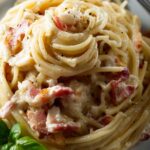
Rich, creamy carbonara made the authentic way with guanciale, Pecorino Romano, and eggs. No cream needed for this restaurant-quality pasta dish.
- Prep Time: 10 minutes
- Cook Time: 15 minutes
- Total Time: 25 minutes
- Yield: 4 servings 1x
- Category: Main Course
- Method: Boil, Saute
- Cuisine: Italian
Ingredients
Scale
- 1 lb spaghetti or bucatini
- 8 oz guanciale, diced (or pancetta)
- 4 large egg yolks
- 1 large whole egg
- 1 cup finely grated Pecorino Romano cheese, plus more for serving
- 1 cup finely grated Parmesan cheese
- 1 teaspoon freshly ground black pepper, plus more for serving
- Coarse salt for pasta water
Instructions
- Bring a large pot of heavily salted water to a boil. Add the spaghetti and cook according to package directions until al dente.
- While the pasta is cooking, place the diced guanciale in a large cold skillet. Cook over medium-low heat, stirring occasionally, until the fat has rendered and the guanciale is crispy, about 10-15 minutes. Turn off the heat and let cool slightly.
- In a large bowl, whisk together the egg yolks, whole egg, Pecorino Romano, Parmesan, and black pepper until smooth and well combined.
- Just before the pasta is done, scoop out and reserve at least 1½ cups of the starchy pasta water.
- Drain the pasta and add it directly to the skillet with the crispy guanciale and its rendered fat. Toss to coat.
- Make sure the skillet is completely off the heat. Pour the egg and cheese mixture over the hot pasta, stirring vigorously with tongs to create a creamy sauce without scrambling the eggs.
- Add ½ cup of the reserved pasta water and continue tossing until the sauce becomes creamy and clings to the pasta. Add more pasta water, a tablespoon at a time, if the sauce is too thick.
- Serve immediately in warm bowls, topped with extra Pecorino Romano cheese and a generous grind of black pepper.
Notes
- Guanciale is traditional for carbonara, but high-quality pancetta works as a substitute. Bacon will add a smoky flavor that’s not authentic but still delicious.
- The key to a creamy sauce is removing the pan from heat and letting it cool for 30 seconds before adding the eggs. This prevents scrambling.
- Always grate cheese fresh from a block. Pre-shredded cheese contains anti-caking agents that prevent smooth melting.
- Carbonara must be served immediately. It does not wait or reheat well.
Nutrition
- Serving Size: 1 serving (about 1.5 cups)
- Calories: 685 kcal
- Sugar: 3 g
- Sodium: 890 mg
- Fat: 32 g
- Saturated Fat: 14 g
- Unsaturated Fat: 16 g
- Trans Fat: 0 g
- Carbohydrates: 62 g
- Fiber: 3 g
- Protein: 35 g
- Cholesterol: 285 mg
Find it online: https://www.benefitiany.com/michael-symon-carbonara/